


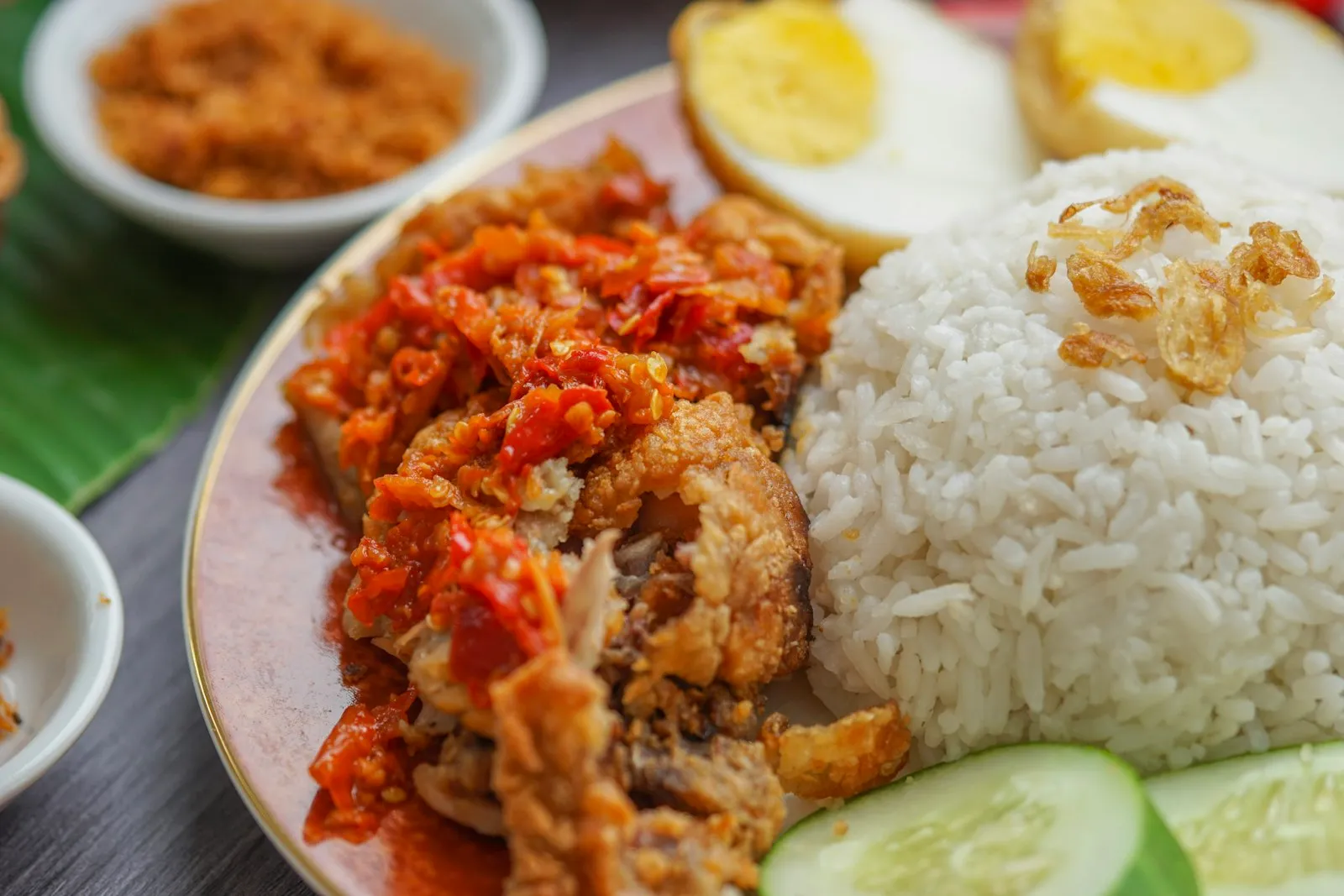
Warungs vs restaurants: the real choice
The cheapest, most authentic food in Bali comes from warungs, the small family-run eateries you pass on every street. A warung serves a short menu of home-style Indonesian and Balinese dishes for a fraction of restaurant prices, and it is where most locals actually eat. Standards do vary: a busy warung with high turnover and food cooked to order is a safer bet than a quiet one with trays sitting out in the heat. Sit-down restaurants and cafes cost several times more and add air-conditioning, English menus and card payment, but rarely beat a good warung on flavour.
The dishes worth ordering by name
A handful of dishes define Balinese eating, and they are worth seeking out by name. Nasi campur is the everyday plate: rice ringed by small portions of vegetables, meat or tofu and sambal, so no two are alike. Nasi goreng, Indonesia's fried rice, is the reliable fallback everywhere. Warung Babi Guling Ibu Oka in Ubud is the classic address for babi guling, Balinese roast suckling pig; note it is pork, so it is common on Hindu Bali but absent from Muslim-run warungs. Satay lilit wraps minced, spiced fish or chicken around lemongrass sticks, and betutu is slow-cooked spiced chicken or duck, richer and worth the wait.
Food by area: Canggu, Seminyak, Ubud, markets
Where you eat shapes what you eat, because Bali's food scenes split hard by area. Canggu runs on health food and long brunches: smoothie bowls, sourdough and flat whites priced for visitors, not locals. Seminyak holds most of the island's fine dining and international restaurants. Ubud leans vegan, raw and organic, with more plant-based menus per street than anywhere else on the island. For real local eating, the night markets are the move: Gianyar Night Market east of Ubud is one of the best, a row of stalls grilling satay and dishing out nasi campur after dark for pocket change.
Bali belly, and how to eat well anyway
Bali belly is real but usually mild, and a few habits cut the risk without turning you paranoid. Most upset stomachs come from unfamiliar bacteria and water rather than dirty kitchens. Drink bottled or filtered water, skip tap water including when brushing your teeth, and be a little cautious with raw salads rinsed in tap water. Ice at established places is factory-made and generally fine. The best filter is a busy warung, where high turnover means food that has not been sitting out. Pack rehydration salts, and give your gut a day or two to adjust rather than assuming the worst.
Prices, plus vegan and halal options
Eating in Bali can cost next to nothing or plenty, depending entirely on where you sit down. As of July 2026, a full warung plate with a drink runs roughly 25,000 to 50,000 rupiah (about €1.50 to €3), while a main at a tourist cafe or restaurant is closer to €4 to €8, and Seminyak fine dining climbs well beyond that. Vegetarians and vegans are well served, especially in Ubud and Canggu. Halal food is easy to find too, since many warungs are run by Muslim families from Java; look for warung nasi and warung padang, and expect no pork or alcohol there.
Finding the good spots on the ground
The best meals in Bali are often the ones you find on the spot, not the ones you booked ahead. Menus are frequently in Indonesian, the best warungs hide down side lanes with no website, and opening hours shift, so a working data connection earns its keep: reading recent reviews before you sit down, translating a menu on your phone, and pinning a place on the map so you can find it again. A prepaid eSIM keeps you online from the airport onward, which matters most on the back streets where the good, cheap food actually lives.