

How to actually shoot Bali
The honest rule for photographing Bali is to arrive early, because almost every famous spot is crowded by mid-morning. Sunrise and the first hour after opening are when you get soft light and thin queues; by 9 or 10am the tour buses arrive and the popular locations fill up. Most sites are managed locally and ask for an entrance fee or a donation at a small booth, and the amounts change over time, so carry some cash and check the posted rate on the day rather than trusting an old figure online. What follows are well-known public spots, with an honest note on what to expect at each.
Rice terraces and ridge walks
For classic green Bali, the Tegallalang rice terraces near Ubud are the postcard, best shot at sunrise before the crowds and the swing operators get going. The terraces are steep and photogenic, but expect other visitors and a few paid photo props on busy days. For something quieter and free, the Campuhan Ridge Walk just outside Ubud is an easy early-morning stroll along a green spine of hills, at its best in the first light before it gets hot. Jatiluwih, in the centre of the island, is a larger, calmer UNESCO-listed alternative if you want terraces without the Tegallalang crush.
The gates: Handara and Lempuyang
Bali's famous gate photos come with an honest catch, especially at Lempuyang. At the Lempuyang Temple Gates of Heaven, the mirror-like reflection in the photos is not water: a staff member holds a mirror or a phone under the camera lens to create the effect. You join a numbered queue and can wait a long time, sometimes hours in peak season, for a single shot. The Handara Gate in the northern highlands is a simpler stop, a traditional split gate you photograph from the road side, usually with a small fee and a shorter wait. Both are worth managing your expectations about before you make the drive.
Waterfalls: Tibumana and Tegenungan
For waterfalls that photograph well, Tibumana and Tegenungan are two of the most accessible near Ubud. Tibumana is a single, tidy curtain of water in a quiet gorge, often less crowded and easier to shoot without people in frame if you arrive early. Tegenungan is wider and more powerful, and because it is close to Ubud and needs no long hike, it is also the busiest, so morning is again your friend. Both charge a small entrance fee at the gate. Bring a cloth for spray on the lens, and mind your footing on the wet steps and rocks, which get slippery.
Nusa Penida: the Kelingking viewpoint
The most dramatic viewpoint on Nusa Penida is Kelingking, the dinosaur-shaped headland above a turquoise cove. The clifftop viewpoint gives you the famous shot and needs no climbing, but it is reached by a long, rough drive from the boat harbour and gets busy through the middle of the day. The trail down to the beach itself is steep, exposed and genuinely strenuous, so treat the descent as a serious hike rather than a quick detour, and plenty of people are happy to shoot from the top and leave it at that. Go as early as your day trip allows for the best light and the most space.
Sunset temples and the drone rules
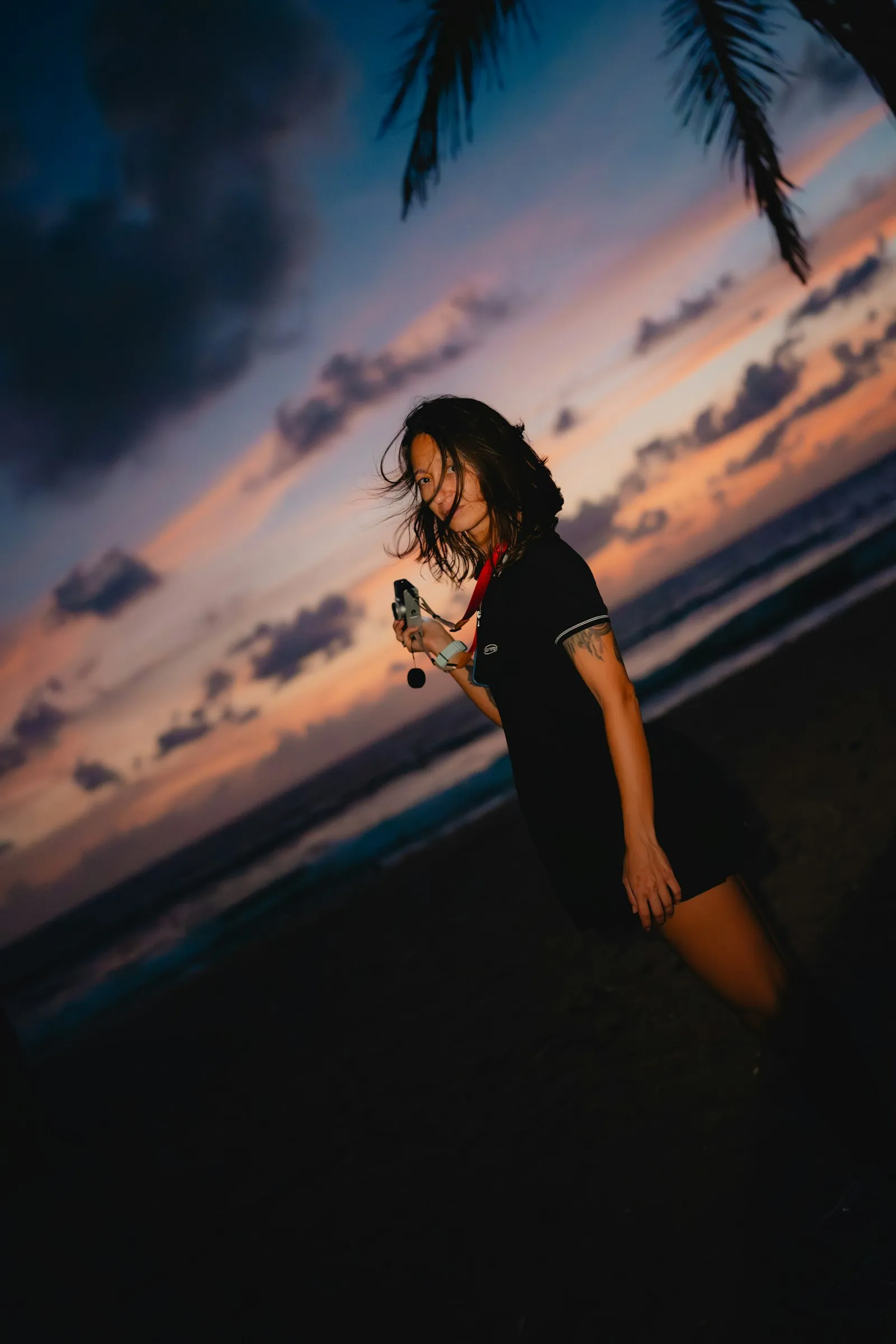
For sunset, Tanah Lot and Uluwatu are the two classic temple silhouettes, and both get crowded, so stake out a spot early. Tanah Lot sits on a rock just offshore and is best framed as the sky colours behind it; Uluwatu perches on a cliff with the Kecak fire dance at dusk. On drones, be careful: Indonesia requires most drones to be registered before you fly, flying over or near temples is restricted, and much of the tourist south sits inside the airport exclusion zone, with heavy fines for breaking the rules. Check the current regulations before you pack one, and never assume a temple is fair game from the air. A working connection makes it easy to check rules, tides and sunset times on the day.