
Wild animals, not a petting zoo
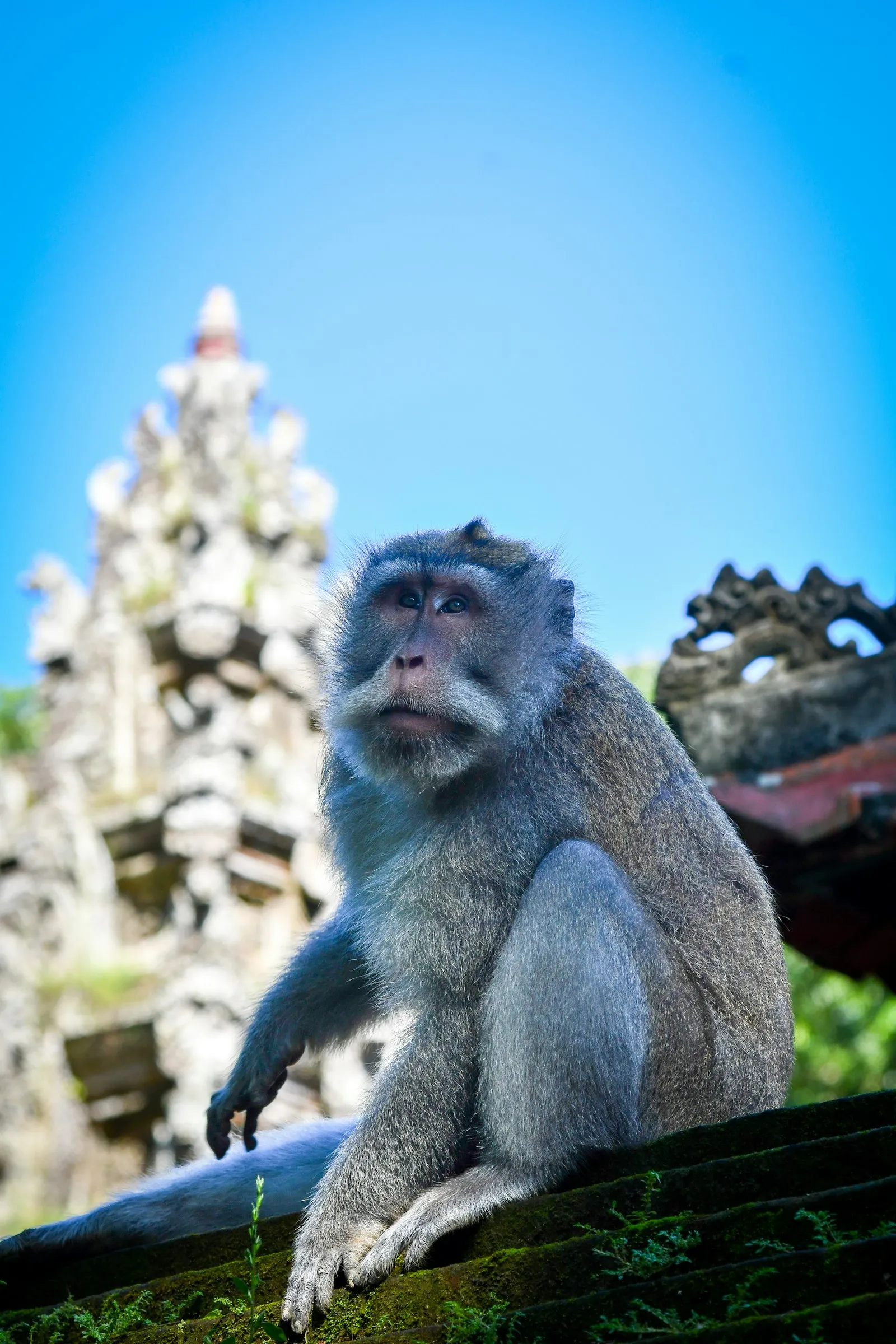
The monkeys you meet at Bali's famous sites are wild long-tailed macaques, not tame attractions, and treating them as wildlife is the whole trick to a good visit. You will see them at the Ubud Monkey Forest, around Uluwatu Temple on the southern cliffs, and at Sangeh north of Ubud. They are used to people and completely unafraid, which reads as cute until one is going through your bag. They are quick, they work in groups, and they have learned exactly what tourists carry. Enjoy watching them, keep your distance, and remember it all comes down to not tempting them.
They will take your things
Assume that anything loose, shiny or edible is fair game, because monkeys routinely grab phones, sunglasses, hats, water bottles and bags. The safest approach is to carry as little as possible into these sites. Leave loose jewellery and a dangling camera strap behind, keep your phone zipped away rather than in your hand for photos, and hold sunglasses and hats instead of wearing them where the monkeys are boldest. A bag that closes fully and sits on the front of your body is far harder to raid than an open tote or a back pocket. If you would hate to lose it, do not bring it in.
Never bring food
Food is the single biggest reason monkeys turn from curious to pushy, so do not carry any snacks, drinks or plastic bags into these areas. Monkeys associate rustling bags and bottles with a meal, and a visible snack can bring several of them straight to you. Even an empty wrapper in a pocket is worth a grab in their eyes. Buy your drink and eat afterwards, outside the site, and keep bags out of sight. Feeding them yourself, however friendly it feels, teaches the boldness that leads to bites and thefts for the next visitor, so leave feeding to nobody.
Read their signals
How you carry yourself matters, so do not make direct eye contact, do not smile with your teeth, and do not crowd or corner them. A wide human smile shows teeth, and to a macaque bared teeth are a threat rather than a greeting, so a friendly grin can be misread. Staring one down is also read as a challenge. Keep your movements calm and unhurried, give them space to pass, and never get between a mother and her baby or two squabbling animals. If one climbs on you, stay still and calm rather than swatting at it, and let it lose interest.
If a monkey grabs something
If a monkey takes your phone or sunglasses, do not chase or fight it, because the animals at temple sites often hold items until they are traded for food. This ransom behaviour is well known at Uluwatu in particular, where staff are used to it. The calm move is to find a member of staff, who can usually coax a swap and get your item back without anyone getting hurt. Chasing a monkey, grabbing back, or trying to corner it is how bites and scratches happen. Losing cheap sunglasses beats a wound, so let the people who do this daily handle it.
The rabies caveat and other wildlife
Take any bite or scratch seriously: wash it thoroughly with soap and running water for several minutes and seek medical care straight away, because of rabies. This applies to monkeys, stray dogs and other animals across Bali, and it holds even when the wound looks minor. Beyond the monkeys, give stray dogs a wide berth, do not handle geckos or snakes, and shake out shoes left outside. Being reachable helps if something goes wrong, since a working connection lets you look up a clinic or call for help. This is general information, so follow a doctor's advice for your own situation.