


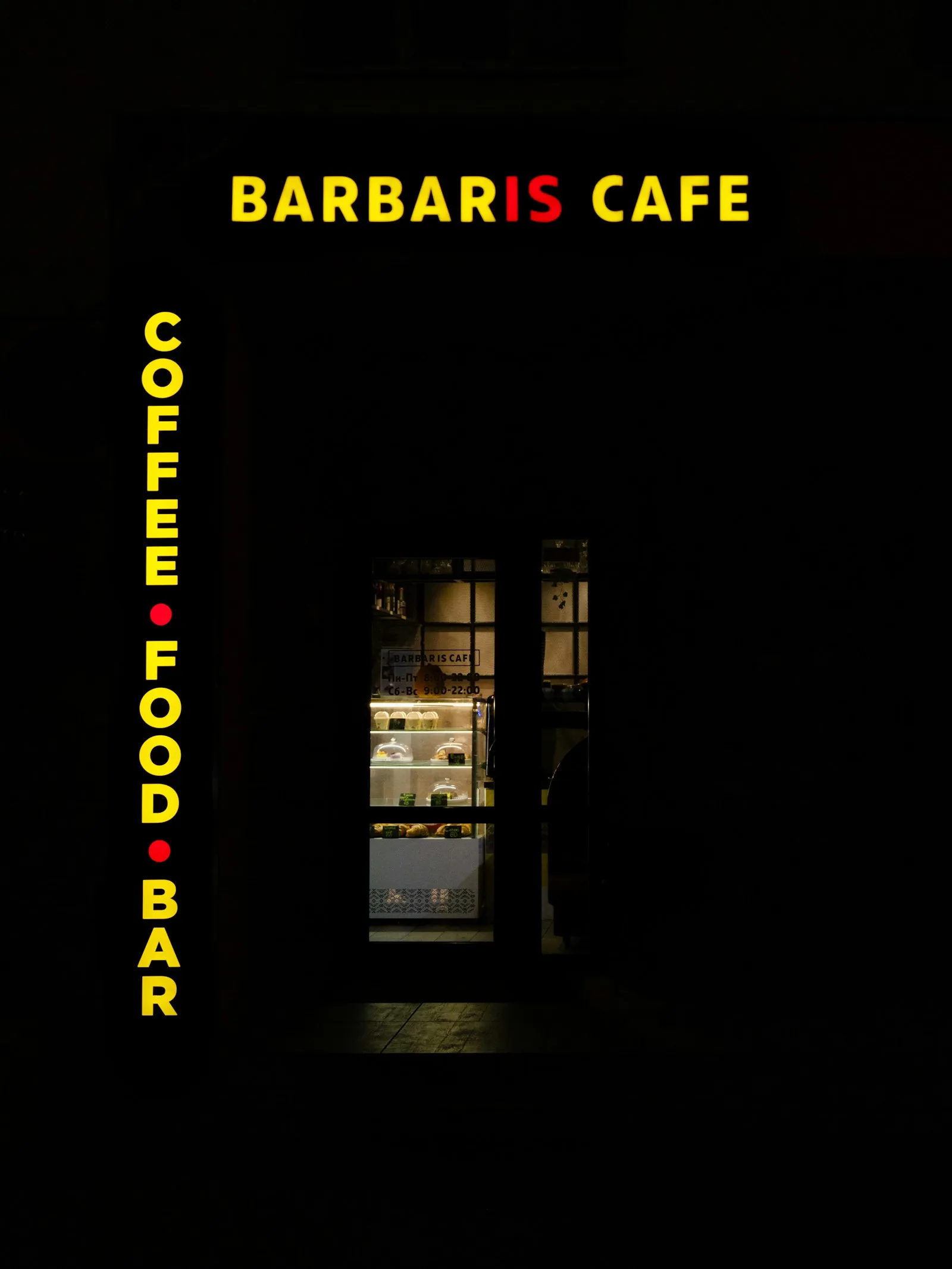
The number that is the problem
This guide holds 1,112 places that serve food or drink. 63 of them are still open after midnight, which is 5.7 per cent. That number is the whole problem with looking for somewhere to eat late on an island built around a sunset and an early start.
It is one strip, mostly
It is concentrated to a degree the rest of the guide never is. 20 of the 63 are in Canggu and 12 more in Tibubeneng immediately north of it, so 32 of them sit inside one strip you could drive end to end in a quarter of an hour. Seminyak adds 5 and Uluwatu 5. Ubud has 3.
Late does not only mean drinking
The split is more even than you would guess: 34 restaurants against 24 bars, and 5 cafés.
These are not discoveries, though. The median entry carries 1,281 Google reviews and only 13 have fewer than three hundred. Everywhere here is already busy, which is precisely why it can afford to stay open when nowhere else does. Late trade needs volume.
Quality holds up anyway, which is not a given for a category defined by an opening hour. The median rating is 4.70 and 32 of the 63 sit at 4.7 or above. You are not trading down by eating late. You are trading down by not planning for it.
You will want data to find them
Late at night is exactly when a plan stops surviving contact with reality. The place you picked has shut, the next one is fifteen minutes away, and your driver needs an address rather than a name. That is a maps-and-messaging problem, and the cafe wifi you were relying on closed along with the cafe.
It is also the hour when a taxi app matters most and works least well without data. Ride-hailing needs a live connection to book, to show the driver where you are and to let you message them when the pin lands on the wrong side of the road, which in Canggu it often does.
None of that is an argument for our eSIM specifically. It is an argument for having any working data at one in the morning, which is the one time of day when asking someone for their wifi password is not an option.