

Jakarta
Jakarta is Indonesia's capital and a working megacity of some 30 million people across its metropolitan area. Most travellers transit rather than stay, and the traffic deserves its reputation, but the food, the museums and the old town reward a day or two.
Jakarta in a nutshell
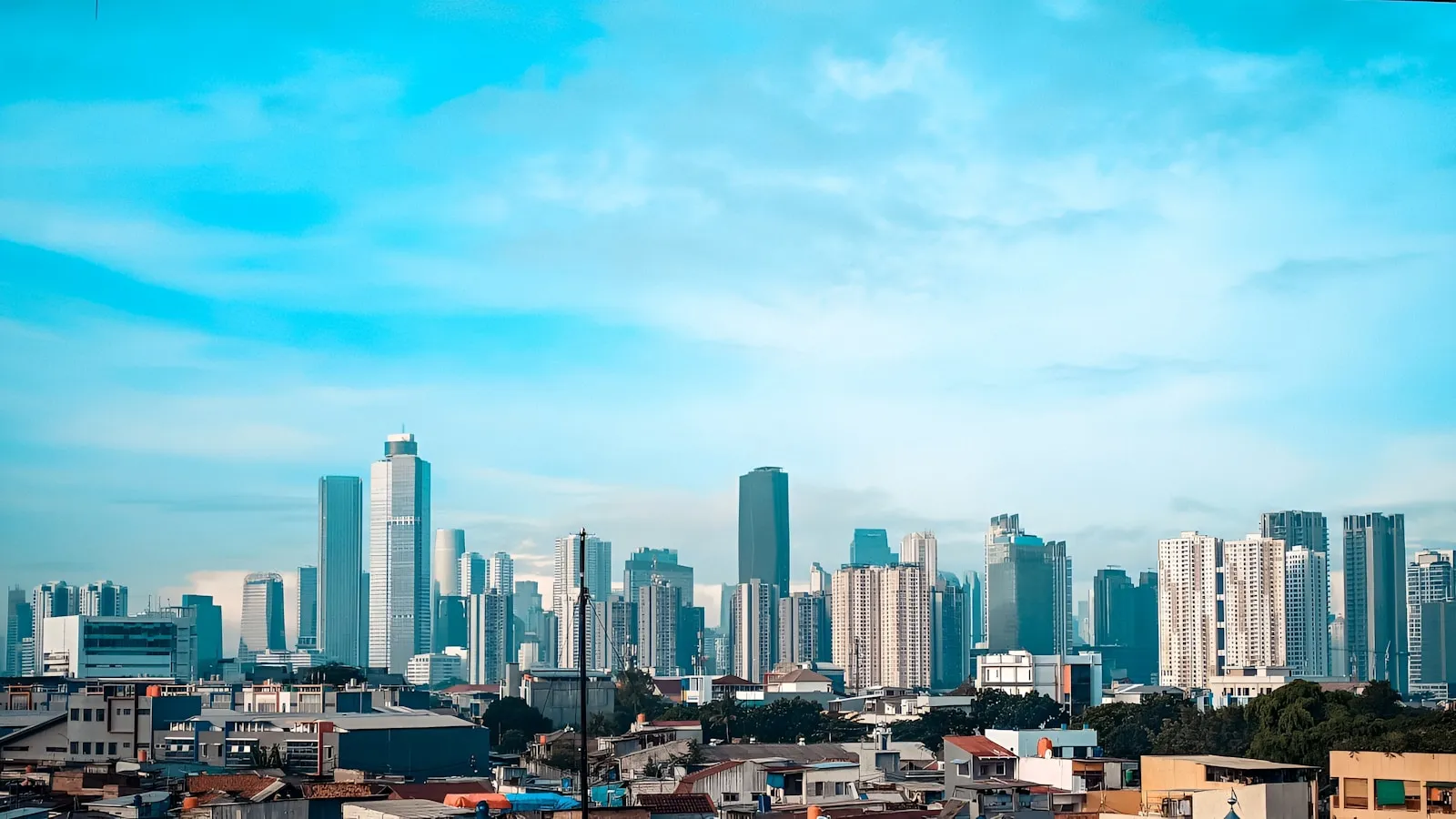
Jakarta is Indonesia's capital and largest city, a metropolitan region of roughly 30 million people that most travellers pass through rather than stay in. It is a working megacity of government, banking, industry and commuting, not a beach holiday, and it is worth arriving with that expectation. It also remains the formal capital: the move to the new capital Nusantara in Kalimantan takes legal effect only once the president issues the transfer decree, which had not happened as of July 2026. Jakarta rewards curiosity and punishes a rushed sightseeing list. The pleasures are the food, the museums, a colonial-era old town and the sheer scale of the place.
The traffic, and how to move anyway
The traffic is genuinely severe, and the answer is to use the rail and bus network rather than sitting in a car. The MRT's north-south line, open since 2019, runs beneath the main Sudirman corridor between Lebak Bulus and Bundaran HI: clean, air-conditioned and fast, with an extension north under construction. TransJakarta operates a very large bus rapid transit network on dedicated lanes, cheap and far quicker than a taxi at rush hour. Commuter rail covers the wider region, and an airport train links Soekarno-Hatta to the centre. Gojek and Grab motorbike taxis filter through jams and are how a lot of people actually cross town at 5pm.
Kota Tua, Monas and the museums
Most of what there is to see sits in two clusters: the old Dutch town in the north and Merdeka Square in the centre. Kota Tua is the colonial-era quarter around a wide cobbled square, with the Jakarta History Museum in the old city hall and the old harbour at Sunda Kelapa nearby, where wooden schooners still load by hand. In the centre, Monas, the National Monument, is the obelisk on Merdeka Square with an observation deck at the top. The National Museum on the square's west side reopened in October 2024 after a 2023 fire and its restoration has continued in phases, so check what is open before you go.
Eating in Jakarta
The food is the strongest single reason to give Jakarta a day. The city draws cooking from across the archipelago, so Padang food from Sumatra, Manado dishes from Sulawesi, Javanese street food and Chinese-Indonesian cooking are all here, at a depth that the tourist strips in Bali rarely match and at a fraction of the price. Street stalls, night markets, mall food courts and serious sit-down restaurants all work, and eating well costs very little. If you only try one thing, make it a Padang rice plate, where a stack of small dishes arrives and you pay for what you touch.
Malls, heat and who Jakarta suits
Jakarta's malls are social infrastructure rather than just shops, and once you accept that, the city makes more sense. Heat and humidity are constant, pavements are inconsistent, and rain arrives hard, so air-conditioned malls act as the city's public living rooms: people meet, eat, work and take their children there for the afternoon. Jakarta suits travellers with a spare day between flights, anyone curious about how the country actually runs, and business visitors. It is a poor fit if you want walkable sightseeing or a slow holiday, and there is no shame in treating it as a transit stop on the way to Yogyakarta or Bali.
Staying connected in Jakarta
Jakarta is among the Indonesian cities where Telkomsel 5G is live, and Goodbars runs on Telkomsel, the network with the widest reach in the country. Coverage across the metropolitan area is dense and fast, which matters more here than in most places: ride-hailing, transit apps, live traffic and QR payments all assume you are online, and losing signal mid-journey in this city is its own kind of misery. As an eSIM it installs before you fly and switches on when you land, so you leave Soekarno-Hatta already connected rather than queuing at a SIM counter with a transfer to catch. Heavy map and ride-hailing use adds up quickly, so the 20GB plan is the safer pick.
Common questions
Is Jakarta worth a stopover?
For a day or two, yes, if you are interested in food, museums and how a huge Asian capital works. It is not a holiday destination in the way Bali or Yogyakarta are: there is no beach, the traffic is heavy and sightseeing is spread out. Many travellers simply connect through and lose nothing.
How bad is the traffic in Jakarta?
Bad enough that it should shape your plans. Rush hours are long in both directions and a short distance on the map can take an hour by car. Use the MRT, TransJakarta or a motorbike taxi instead of a car where you can, and avoid scheduling a tight airport run through the evening peak.
How do you get around Jakarta?
The MRT north-south line covers the main Sudirman corridor, TransJakarta runs an extensive bus rapid transit network on dedicated lanes, and commuter rail reaches the wider region. Gojek and Grab cover everything else, with motorbike taxis the fastest option in traffic. An airport train connects Soekarno-Hatta to the centre.
What is there to see in Jakarta?
Kota Tua, the old Dutch quarter, with the Jakarta History Museum and the old harbour at Sunda Kelapa nearby; Merdeka Square with the Monas monument and the National Museum, which reopened in October 2024 after a fire; and Istiqlal Mosque with the cathedral facing it. The food is the other headline attraction.
How many days do you need in Jakarta?
One or two is enough for most visitors: a morning in Kota Tua, an afternoon around Merdeka Square, and a couple of good meals. Longer only makes sense if you are there for work, visiting people, or using it as a base for day trips out of the city.
Does mobile data work well in Jakarta?
Yes. Jakarta is one of the Indonesian cities with Telkomsel 5G, and 4G/LTE is dense across the metropolitan area. Data matters here because ride-hailing, transit apps and QR payments all need it, so arriving with a working connection rather than looking for a SIM counter is worth the small effort.
On the map

Wherever you goSTAY ONLINE
Pick a plan, install in minutes, and step off the plane connected in Bali. From €13.99.
See the plans- No ID needed
- No contract
- Instant email delivery
- Works on arrival