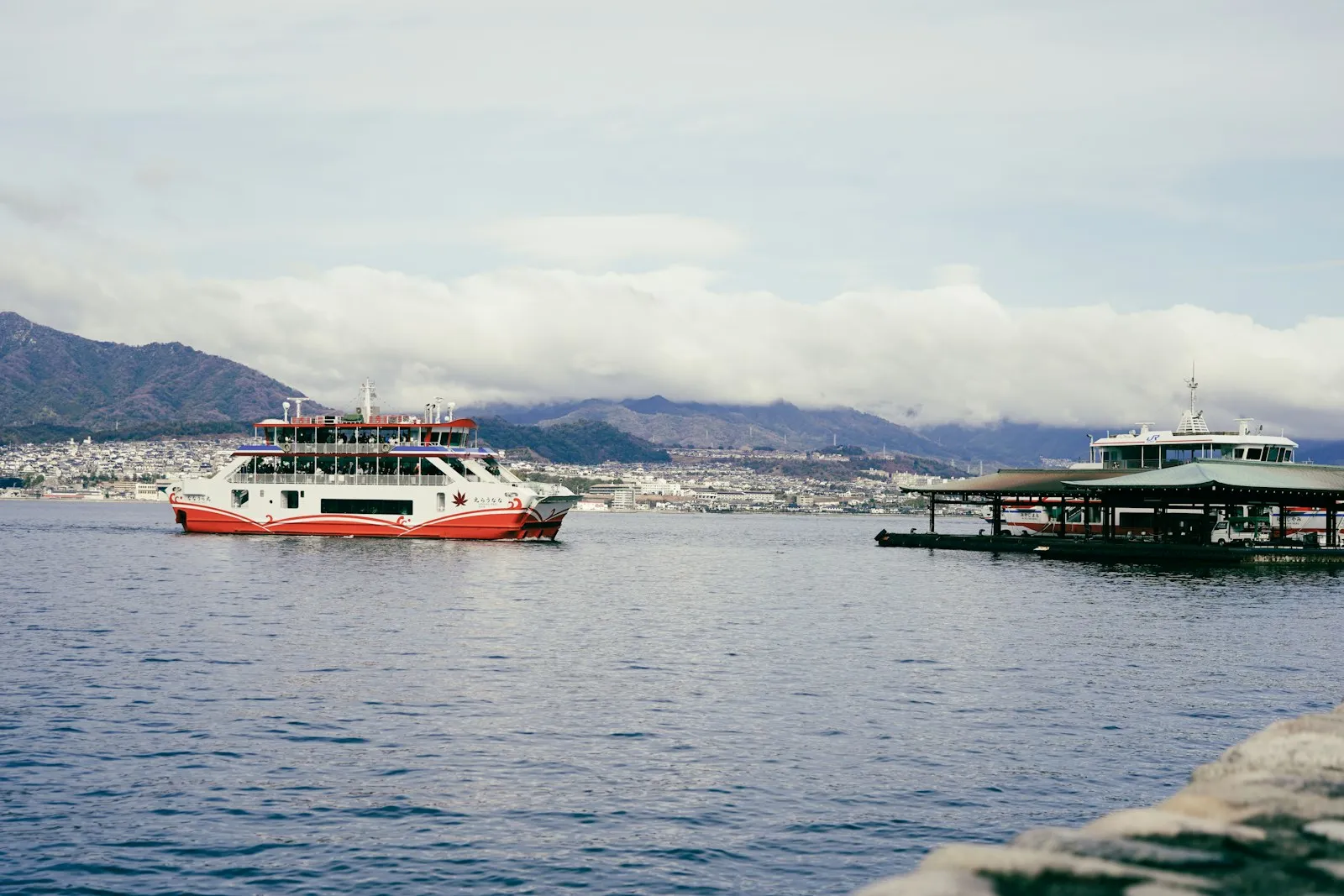
The crossing: train to Miyajimaguchi, then ten minutes on the water
Miyajima is an island, and the whole journey is a train followed by a short boat. The JR Miyajima Ferry runs between Miyajimaguchi, in Hatsukaichi, and the island, and one trip takes ten minutes. Three boats work the route, the Miyajima-maru, the Nanaura-maru and the Misen-maru, and the route is old: it started as a private boat service in 1897 and is the last of the JR connecting-ferry lines. The island is properly called Itsukushima; Miyajima, the name everyone uses, means shrine island. Check the train time from Hiroshima to Miyajimaguchi in a transit app and let the ferry take care of itself.
The tide decides your hour
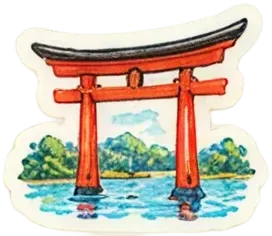
The famous gate stands out in the water, so the sea level changes the picture entirely. The otorii of Itsukushima Shrine is 15 metres tall, vermilion, and built of decay-resistant camphor wood, and it is the most photographed object in the prefecture. Look up a tide table for the day before you decide what time to cross: high water and low water give you two different places, and people who care about the photograph plan around it rather than around lunch. The shrine itself is built out over the sea, which is the same idea at a larger scale, and a typhoon can still reach it: Typhoon Songda damaged it severely on 5 September 2004.
Itsukushima Shrine: what you are paying to see
Entry to the shrine costs ¥300. What that buys is a UNESCO World Heritage complex of two main buildings, the Honsha and the Sessha Marodo-jinja, plus seventeen other structures, much of it in the form Taira no Kiyomori gave it in 1168 when he was governor of Aki Province. The noh stage dates from 1590. The five-storied pagoda above the shrine went up in 1407, and the great hall Toyotomi Hideyoshi built on the hill in the sixteenth century, the Senjokaku, is the largest building on the island. Purity has been taken seriously here for a long time: since 1878 no births or deaths have been permitted near the shrine.
Mount Misen and the rest of the island
Most visitors see the gate and leave, which is why the island is worth a longer look. Itsukushima is rural and mountainous, 30.39 square kilometres with a population of about 2,000, and it has been counted among the Three Views of Japan since Hayashi Gaho named them in 1643. Mount Misen, 535 metres, is the high point: the Miyajima Ropeway carries you to within a thirty-minute walk of the top, and the walk is a walk, not a stroll. The upper slopes are known for cherry blossom in spring and maple colour in autumn, which is the same calendar as the mainland and the same crowds.
Doing the Peace Memorial Park the same day
Both fit in one day, and the order matters more than the timing. The Peace Memorial Park is in the centre of Hiroshima, built on the open ground the explosion of 6 August 1945 left behind, and it draws more than a million people a year. The A-Bomb Dome has been on the UNESCO list since December 1996, and the museum, whose clock on the roof is stopped at 8:15, charges ¥200 for adults. The park is not a sight; it is a memorial, and an hour there changes the tone of your afternoon. Most people put the island first and the park second for that reason. The city holds its Peace Memorial Ceremony in the park on 6 August each year.
Tickets, timing and staying online
Carry cash and give yourself more time than the map suggests. Small shrines and small shops still want coins, and the ferry, the ropeway and the shrine are three separate transactions. A Japan Rail Pass only comes in 7, 14 or 21 consecutive days, and Nozomi and Mizuho services have needed a supplement since 1 October 2023, so for a single day out an IC card and ordinary tickets are usually the better answer. Autumn colour on the island runs with the rest of the country, from late October to early December.
Goodbars sells a Japan eSIM you install at home and switch on when you land; it runs on NTT docomo, Japan's largest mobile network by mobile contracts, and our Japan coverage page shows where it reaches and what independent speed tests measure. docomo's 5G standalone spot list of 31 May 2026 names the south exit of JR Hiroshima Station; it names nothing on the island, so plan on LTE there, which docomo's 2025 sustainability report puts at about 100% population coverage.