
The short answer
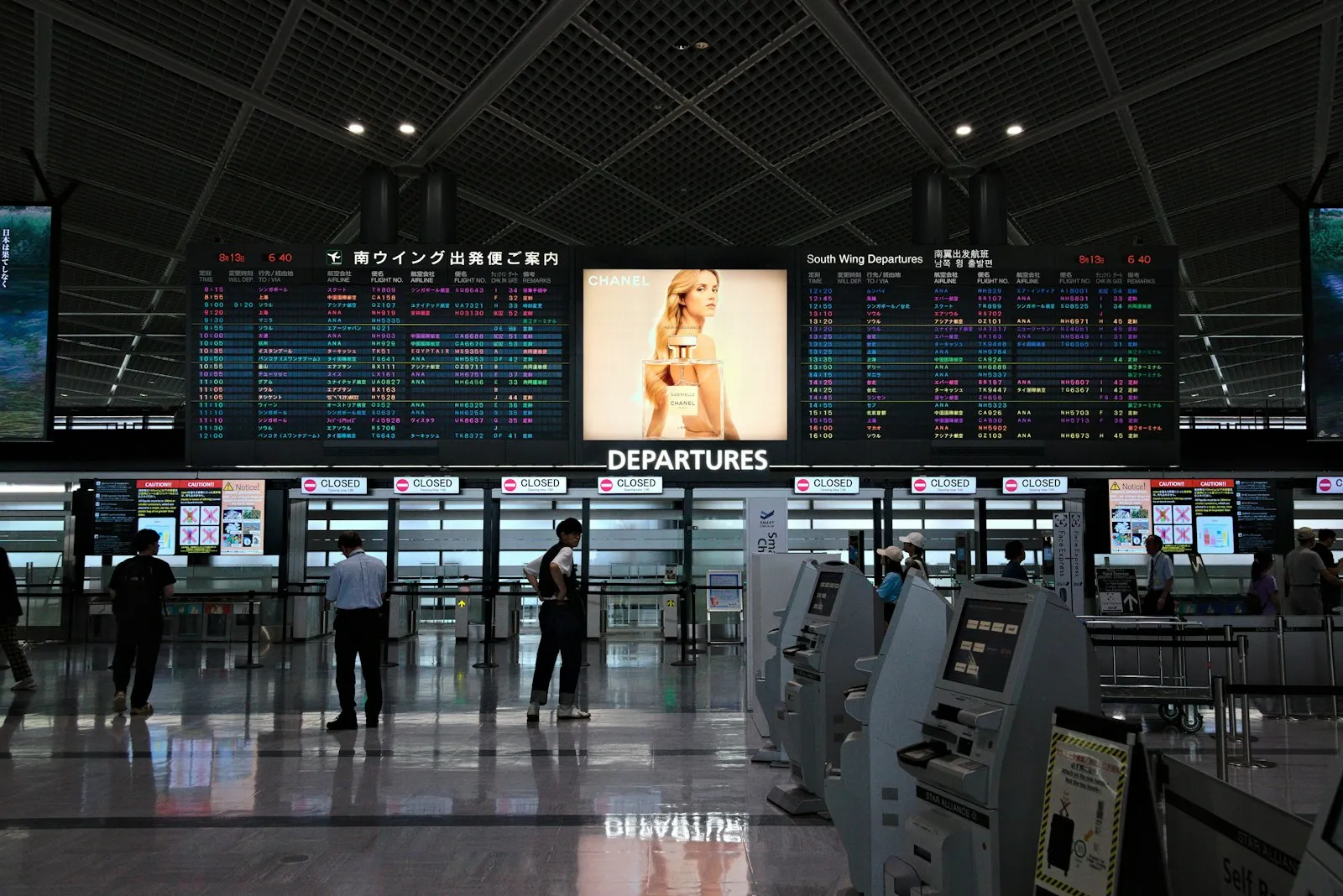
Install your eSIM at home, have your passport ready and, if you filed one, the Visit Japan Web QR code on your screen, then walk past every SIM counter between the gate and the train. Narita sits about 60 km east of central Tokyo, in Narita, Chiba. It opened in 1978, handled 42.3 million passengers in 2025, and still sorts flights by alliance: Terminal 1 has a North Wing for SkyTeam carriers and a South Wing for Star Alliance, Terminal 2 serves Oneworld, and a third terminal takes the low-cost carriers.
Immigration comes first
Off the plane you go to passport control. EU and Turkish passports enter visa-free for stays of up to 90 days as temporary visitors, so a passport is usually all you show. Immigration photographs and fingerprints every foreign visitor, which is the part that makes the queue slow. Visit Japan Web, the Digital Agency's service, lets you do the immigration and customs steps online before you land and show a QR code at the desk; foreign visitors can also use it for tax-free shopping during the stay.
Keep the stamped passport on you afterwards: hotels ask for it, and so do the tax-free counters in the shops.
What the SIM counters in arrivals do
Operator counters and vending machines in the arrivals halls sell tourist SIMs, and they do work: you pick a plan, you pay, and someone helps you set it up. The costs are the ones nobody advertises. You queue again after a long flight and a slow immigration hall, the counters keep their own hours, which is a problem on a late arrival, and you spend the walk from the gate to the counter offline, which is the walk where your train platform and your hotel address live.
Installing before you fly removes all of it. An eSIM is a profile, not a card: scan it at home on Wi-Fi, leave it switched off, and turn it on when the plane door opens. The caveat is honest, an eSIM needs a phone that supports it.
Getting into the city
Trains leave from the station under the terminals. The JR Narita Express reaches Tokyo Station in about an hour and carries on to Shinjuku; the Keisei Skyliner reaches Ueno in around forty minutes. Both offer visitor fares, both are easier to sort out with a phone in your hand, and either beats sitting in traffic. Limousine buses are the fallback when you have more luggage than you want on a platform, and a taxi from Narita is long and expensive. If you get a choice of airport, Haneda is closer to the city and takes the other half of the flights.