How Japan actually photographs
The cities are vertical and the countryside is seasonal, and both punish people who arrive at eleven in the morning. Tokyo and Osaka work after dark, when signage does the lighting for you and a wet pavement doubles it. Kyoto, Nara and the mountains work at first light, before the coaches. The middle of the day is for interiors, markets and covered arcades. Plan one dawn and one night shoot a day and skip the rest; trains run to a timetable you can actually rely on, so moving between two ends of a city is a small cost. Carry a small tripod only where it is allowed, and expect it to be refused indoors.
Tokyo: Shibuya Crossing and Senso-ji
Shibuya Crossing is the shot everyone wants and it is genuinely worth the effort. The scramble by Shibuya Station is described as the world's busiest pedestrian crossing, with up to 3,000 people crossing on a single green light, which comes around every two minutes. It is busy even at midnight, so there is no bad hour, only better ones; the surrounding buildings hold the elevated viewpoints, and the Hachiko statue is the ground-level landmark. Senso-ji in Asakusa is the other Tokyo staple: the Kaminarimon gate, the lanterns along Nakamise-dori, and grounds that stay open at all hours, which means the shot without the crowd is available before breakfast.
Kyoto: Fushimi Inari, Arashiyama, Kinkaku-ji
Fushimi Inari is free and open around the clock, which is the only reason a clean frame of the Senbon Torii still exists. Roughly 10,000 torii stand on the mountain and about 800 of them form the famous tunnel; the trails up Mount Inari, 233 metres, span 4 kilometres and take about 2 hours, and the crowd thins sharply past the first climb. Arashiyama, on the western edge of Kyoto, is a nationally designated historic site and place of scenic beauty, with the mountain rising across the Oi River behind everything you frame. Kinkaku-ji gives you one composition and it is a good one: a three-storey pavilion, 12.5 metres tall, its upper floors in gold leaf, reflected in the pond.
The icons: Fuji, Miyajima, Himeji
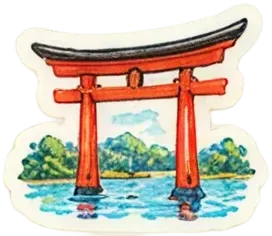
Mount Fuji is a weather lottery, so give it two chances rather than one. The cone rises to 3,776 metres about 100 kilometres south-west of Tokyo and is visible from the city on clear days; it carries snow for roughly five months of the year, and the seasonal snowcap appears on an average date of 2 October. Hakone puts you at its feet with a lake in the foreground. Itsukushima, better known as Miyajima, has been called one of the Three Views of Japan since 1643, and the five-storied pagoda above the shrine dates from 1407; Mount Misen, 535 metres, gives the high view. Himeji Castle is the cleanest architecture subject in the country: 83 white structures, a UNESCO site since 1993, reopened after restoration on 27 March 2015.
The seasons decide the picture
In Japan the calendar is a bigger lens choice than anything in your bag. Cherry blossom runs from mid-March into April, earlier in the south and later in the north, and the exact peak moves every year with the weather, so treat any fixed date as a guess. Autumn colour arrives from late October to early December. The tsuyu rains fall from early June to mid-July, typhoons run from June to December, peaking from July to September, and Tokyo's August days climb above 31 degrees, which shows in every frame with a person in it. Winter on the Pacific side is dry and clear, which is the best odds you will get on Mount Fuji. Kyoto is where everyone wants blossom and leaves, so book early and start at dawn.
Where you may not shoot, and drones
Some of the most photogenic places in Japan are legally off limits, and the signs are the only warning you get. Shinjuku Golden Gai is the clearest case: its six alleys are private roads, and shooting photographs or video on the street there is prohibited without permission from the area's business promotion association. Many temple and shrine halls ban cameras indoors, and the notice sits at the door. Never photograph someone praying, and never point a lens at staff in an entertainment district. Drone rules in Japan are strict and site specific, so check with the local authority and the site itself before you fly rather than assuming. Goodbars sells a Japan eSIM you install at home and switch on when you land; it runs on NTT docomo, Japan's largest mobile network by mobile contracts, and our Japan coverage page shows where it reaches and what independent speed tests measure.