What tsuyu is really like
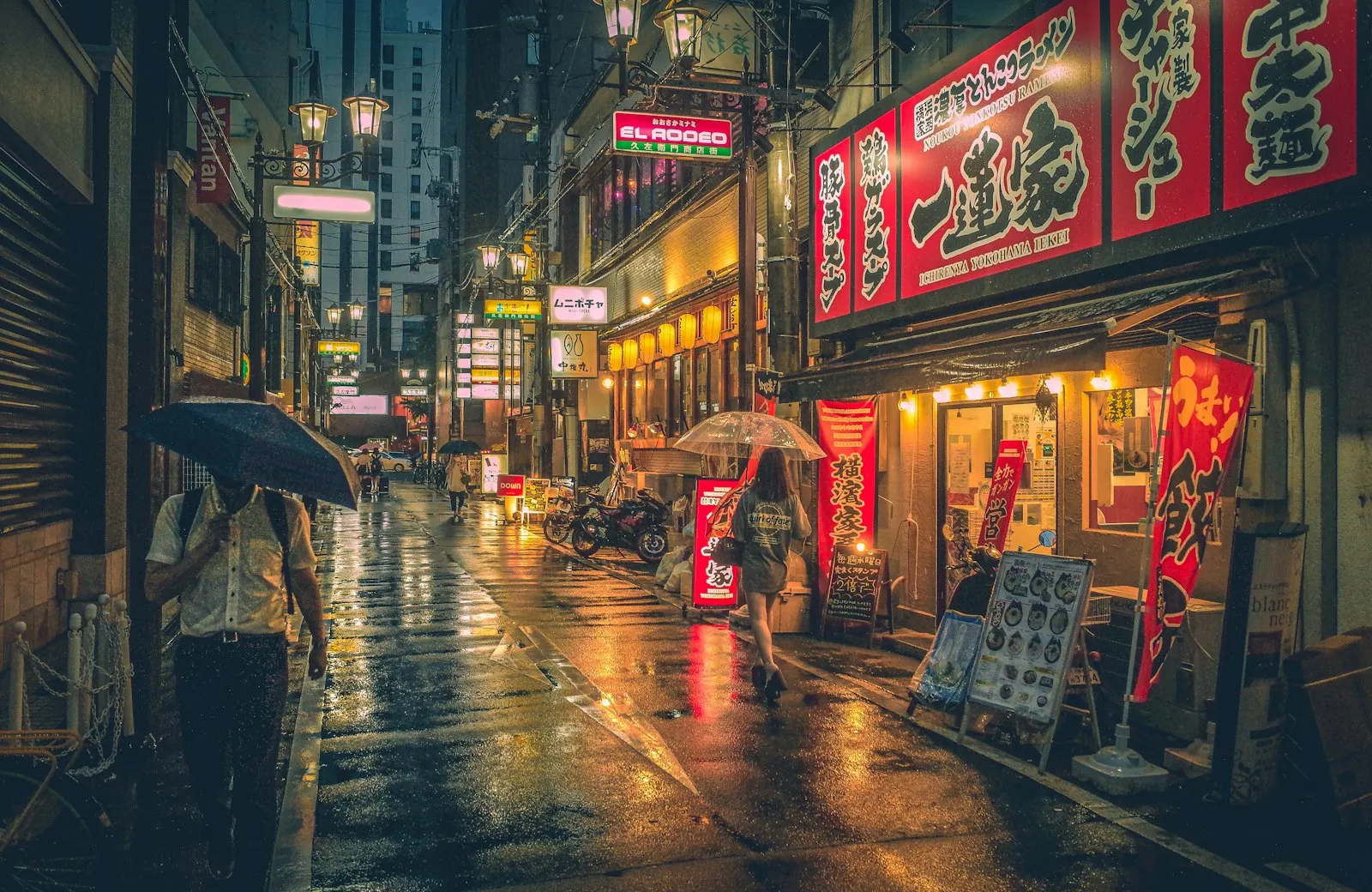
Japan's rainy season, tsuyu, sits over most of the country from early June to mid-July, and the honest picture is grey and humid rather than washed out. Most of Honshu, Shikoku and Kyushu have a humid subtropical climate with four clear seasons, so this is the damp hinge between spring and a hot summer. Rain comes in long soft spells as often as downpours, and the humidity is the part people remember. Hokkaido, with its continental climate, is the usual escape, and the Ryukyu islands run to their own subtropical rhythm. Trains keep running, temples stay open, and an umbrella is sold on every corner.
The upside: fewer crowds, greener country
The wet weeks sit between the two seasons everybody books for, and that is the whole argument for coming. Cherry blossom arrives mid-March into April and the autumn colour from late October to early December, and Kyoto is where the world wants to see both, which is why the advice there is to book early and start at dawn. In tsuyu the same lanes are walkable, the gardens are at their greenest, moss and stone look the way the photographs promise, and you can stand in front of a famous view without queueing for it. Bring the right jacket and the trade is a good one.
Wet-weather days in the cities
Japanese cities are built for this, and a wet afternoon is rarely a wasted one. Kyoto's Nishiki Market is a narrow covered arcade running about 400 m with around 130 shops of fish, vegetables, pickles and dry goods, which is why it is called Kyoto's kitchen. Yokohama Chinatown, the largest in Japan with roughly 250 Chinese-owned or themed shops and restaurants, is a day out on its own from Tokyo. Add the food halls in the basements of department stores, covered shopping streets, museums, a ticket-machine ramen counter and the endless convenience stores, and the day fills itself. Check opening times before you set out.
Rain is onsen weather
Hot water outdoors in the rain is one of the better arguments for coming in a wet month. Hakone, a spa town in Kanagawa, is the classic short hop from Tokyo: hot springs within sight of Mount Fuji on the days the mountain shows itself, plus Lake Ashi and the Hakone Shrine when it does not. Nikko, north of Tokyo in Tochigi, pairs its shrines with hot springs of its own. The etiquette is fixed and worth knowing before you go: you bathe nude, baths are separated by sex, you wash thoroughly before getting in, and the small towel stays out of the water. Many baths do not admit tattoos, so ask, or book a private bath.
Gion Matsuri, the festival inside the wet month
July, the wettest stretch of the calendar, is also when Kyoto holds the Gion Matsuri, one of the largest festivals in Japan. It runs through the whole month around Yasaka Shrine in the Gion district, and it is best known for its two Yamaboko Junko float processions on 17 and 24 July. The evenings before each procession, the yoiyama nights, close the downtown streets to traffic, line them with food stalls, and open some old private houses so families can show their heirlooms. Expect heat, humidity and crowds together, book a room early, and treat rain as part of the picture rather than a spoiled plan.
Typhoons, packing and staying connected
Tsuyu and typhoon season are two different things, and the second one deserves more respect. Typhoons cross the islands from June to December, peaking from July to September, and August is also the month to skip if heat bothers you: the daily high in Tokyo averages above 31°C. On a storm day, follow the Japan Meteorological Agency alerts on your phone and check your train operator before you set out rather than after. Pack a light rain jacket, a small umbrella you can replace anywhere, and shoes that dry. Keep your phone working: Goodbars sells a Japan eSIM you install at home and switch on when you land; it runs on NTT docomo, Japan's largest mobile network by mobile contracts, and our Japan coverage page shows where it reaches and what independent speed tests measure.