

Fushimi Inari-taisha
On the map
The head shrine of Inari
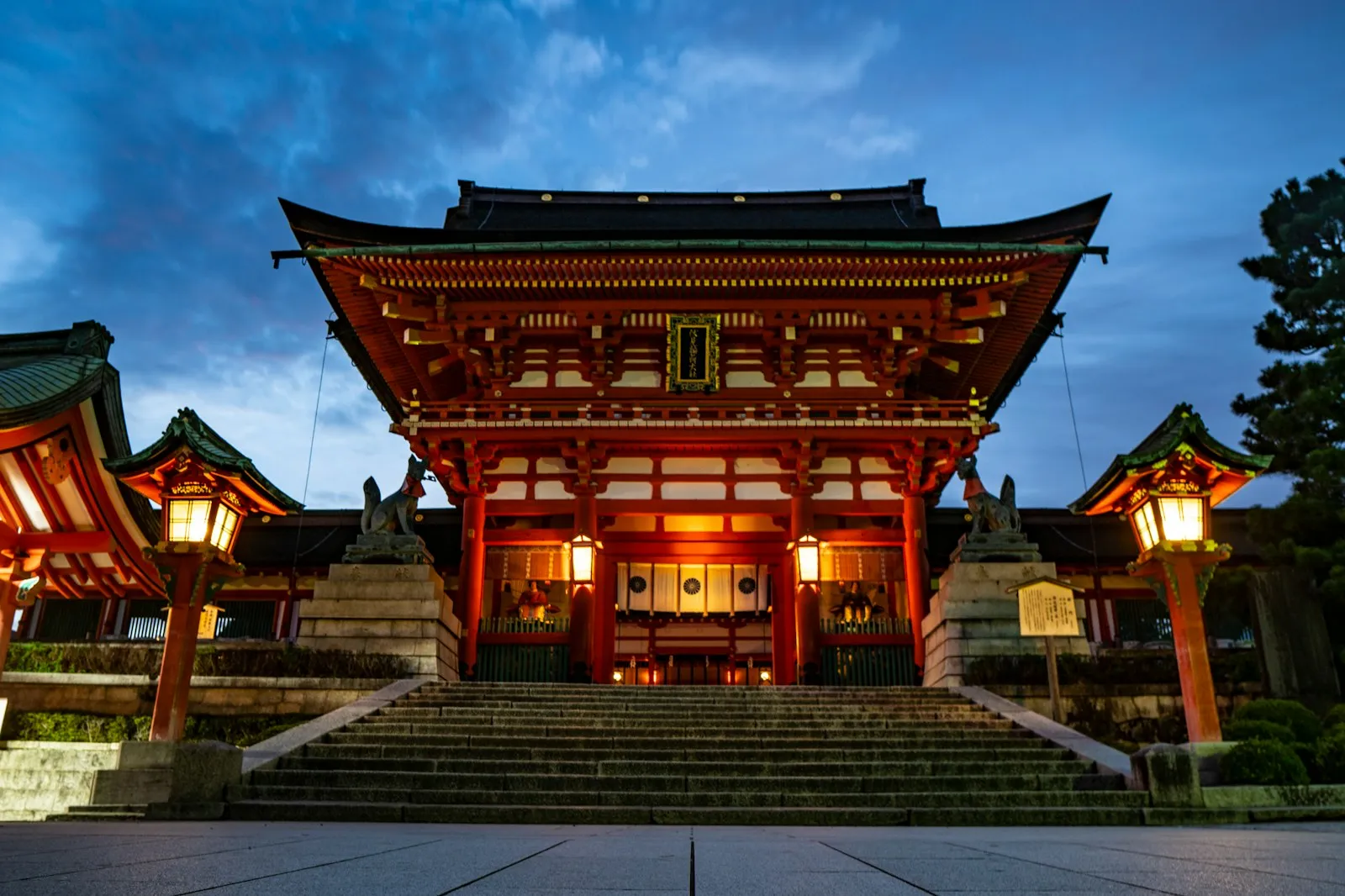
Fushimi Inari-taisha is the head shrine of Inari, founded in 711 by the Hata clan and still the parent of thousands of Inari shrines across Japan. It sits at the foot of Mount Inari on the south side of Kyoto, it is free, and it is open around the clock, which is unusual and useful: you can walk in at five in the morning or at eleven at night and nobody will stop you. That single fact is the difference between the photographs you have seen and the shrine most day visitors actually get.
The Senbon Torii
Roughly 10,000 torii stand on the mountain, each one donated by a business, with the donor's name painted on the back of the post. About 800 of them line up close together just behind the main buildings to form the Senbon Torii, the tunnel of vermilion gates that everyone comes for. Walking up through it you see plain wood; walking back down you see the names, which is the better half of the experience. This first stretch is where the crowd concentrates, and where a dawn visit pays for itself.
The climb up Mount Inari
Most visitors photograph the first tunnel and turn around, which is why the shrine empties out the higher you go. The trails span 4 km up and around Mount Inari, which rises to 233 m, and the full loop takes about two hours at a steady pace. It is stairs most of the way, through cedar woods, past small sub-shrines and stacks of miniature torii left by worshippers, with a viewpoint back over Kyoto partway up. Ordinary walking shoes and water are enough; there is nothing technical about it, only a lot of steps.
Getting there and staying connected
JR Inari station puts you at the entrance, which makes this one of the few famous sights in Kyoto that does not involve a crowded bus. Tap in with a Suica or Pasmo IC card and go. Come at dawn: the shrine never closes, the first tunnel is empty and the light through the gates is at its best. Shrine manners apply at the bottom, where the main buildings are: bow as you pass the torii, rinse your hands at the basin, and two bows, two claps and one bow at the offering box. Goodbars sells a Japan eSIM you install at home and switch on when you land; it runs on NTT docomo, Japan's largest mobile network by mobile contracts, and our Japan coverage page shows where it reaches and what independent speed tests measure.
Common questions
How many torii gates are at Fushimi Inari?
Roughly 10,000 across the whole mountain, each donated by a business whose name is painted on the back of the post. About 800 of them form the Senbon Torii, the dense tunnel just behind the main buildings.
How long does the hike up Mount Inari take?
About two hours for the full loop. The trails span 4 km up and around the mountain, which rises to 233 m, and it is stairs most of the way. Walking shoes and water are all you need.
Do I need a ticket, and when is it open?
No ticket: the shrine is free and open around the clock. That is what makes dawn the best time to go, since you can be inside the first torii tunnel before the day visitors arrive.
Will my phone work at Fushimi Inari?
The shrine sits in southern Kyoto and the entrance is beside a station, so the bottom is straightforward; assume less certainty on the wooded upper trails and download the map before you climb. Goodbars sells a Japan eSIM you install at home and switch on when you land; it runs on NTT docomo, Japan's largest mobile network by mobile contracts, and our Japan coverage page shows where it reaches and what independent speed tests measure.

Install before landingLAND ONLINE
Set up your eSIM at home and step off the plane already connected. No counter, no passport handed over, no queue.
See the plans- No ID needed
- No contract
- Instant email delivery
- Works on arrival