How to use this 7-day plan
Tokyo, Kyoto, Osaka, in that order: seven days is the golden route and nothing else. It works because the trains work, and because the three cities are different enough to carry a week: the scale of the capital, Kyoto's temples and old streets, Osaka's food. Run it westwards rather than back and forth, and you unpack twice instead of four times. Give days 1 to 3 to Tokyo, days 4 and 5 to Kyoto, days 6 and 7 to Osaka with Nara as the day trip. Read each day as morning, afternoon and evening beats you can shuffle, not a timetable, and book Kyoto first: that is where everyone wants to be in blossom and autumn season.
Days 1 to 3: Tokyo
Three days in Tokyo is one big sight a day with a neighbourhood around it. Base yourself near a Yamanote line station and the city turns into a train ride. Day one is Shinjuku: the station, the department stores above it, the alley bars of Golden Gai after dark. Day two is Shibuya and the scramble crossing outside the station, described as the world's busiest pedestrian crossing, with up to 3,000 people on a green light; the Hachikō statue is where everybody meets. Day three is Asakusa and Sensō-ji, founded in 645 and dedicated to Kannon, reached through the Kaminarimon gate and the stalls of Nakamise-dōri. Keep one evening for Ginza or Akihabara.
Days 4 and 5: Kyoto
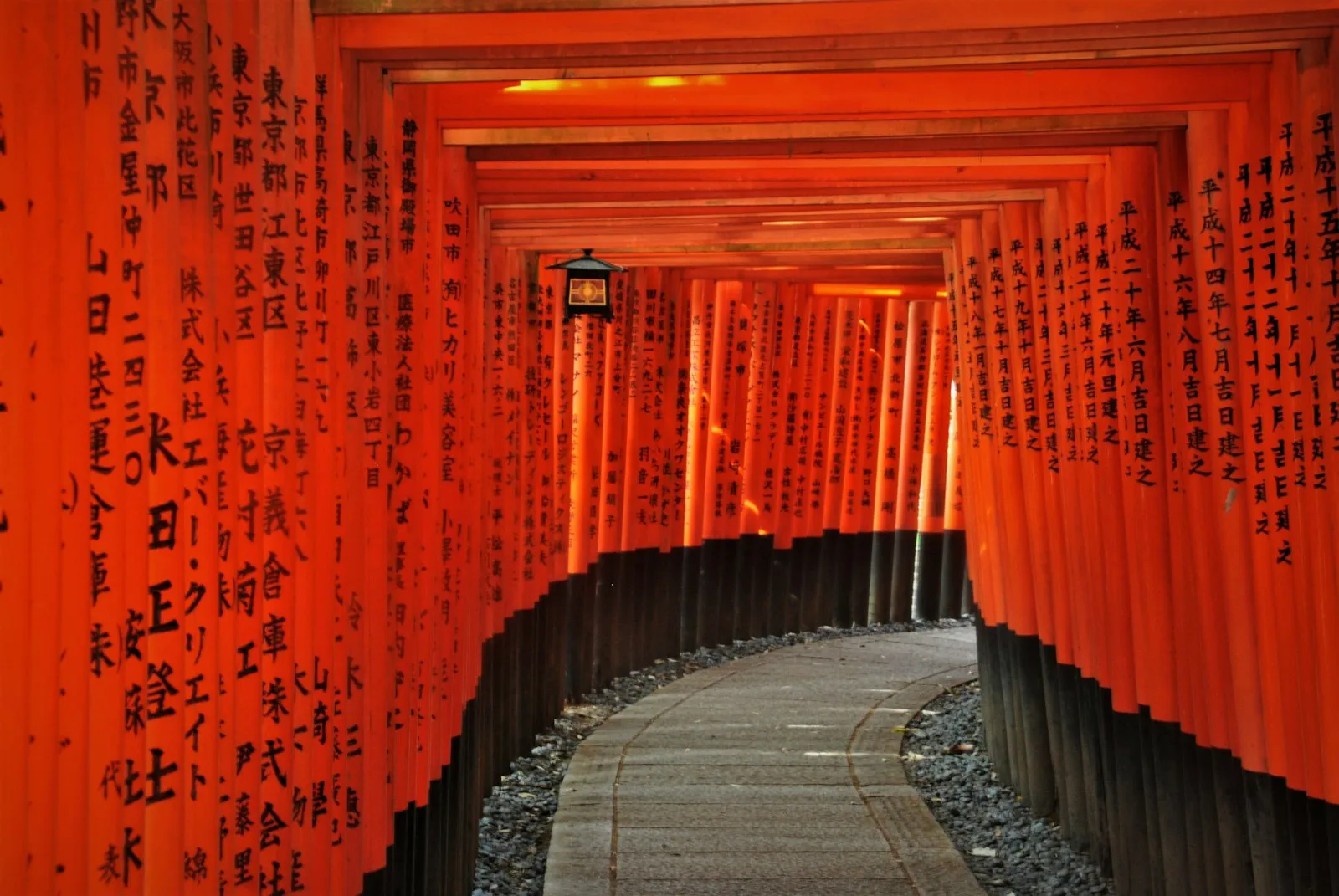
Two days in Kyoto works only if you start at dawn. The shinkansen from Tokyo takes around 2.5 hours and drops you at Kyoto Station. Go out early on the first morning to Fushimi Inari-taisha, founded in 711 by the Hata clan, free and open around the clock, where about 800 of its roughly 10,000 torii form the Senbon Torii tunnel; JR Inari station is at the entrance. The full trail up Mount Inari, 233 m, runs 4 km and takes about two hours, so turn back at the first viewpoint if you want the rest of the day. Spend the afternoon in the old streets of Higashiyama and the evening in Gion, then give day five to Arashiyama and its bamboo grove out west.
Days 6 and 7: Osaka, with Nara as the day trip
Osaka is fifteen minutes from Kyoto by shinkansen, so day six can start late and eat well. Dōtonbori is the point of the city: the canal was begun in 1612 by Nariyasu Dōton and finished in 1615, and the banks are neon now, with the Glico running man above and takoyaki, okonomiyaki and kushikatsu at street level. Namba station puts you in the middle of it. Keep the morning for Osaka Castle in its park. Day seven is Nara, the easiest day trip in Kansai, for the deer park and the Great Buddha, with time to be back in Minami for a last dinner.
Is a week enough, the train legs and staying online
A week covers the golden route and nothing beyond it, and the shinkansen is why it fits at all. The Tōkaidō line opened in 1964 and runs 552.6 km between Tokyo, Yokohama, Nagoya and Osaka, with Nozomi the fastest service on it. This trip needs two legs, Tokyo to Kyoto and Kyoto to Osaka, which is why a Japan Rail Pass rarely pays here: it comes in 7, 14 or 21 consecutive days, only works out on long itineraries, and since 1 October 2023 Nozomi and Mizuho trains need a supplement. Goodbars sells a Japan eSIM you install at home and switch on when you land; it runs on NTT docomo, Japan's largest mobile network by mobile contracts, and our Japan coverage page shows where it reaches and what independent speed tests measure.