The short answer
Japanese etiquette is mostly about not imposing on the people around you. Take your shoes off where shoes come off, stay quiet on trains and never take a call on one, and put your money in the tray at the till rather than in the cashier's hand. A small nod covers most of what bowing asks of a visitor. Chopsticks never stand upright in a bowl of rice, and food never passes from chopstick to chopstick. Nobody tips. Bins are rare, so you carry your rubbish until you find one. Onsen bathing is nude and washed-first, and many baths still turn tattoos away.
The bow, the shoes and the slippers
Bowing is a scale, not one gesture: bend from the waist with a straight back, around 15 degrees for something casual and around 30 for something formal, deeper as the respect goes up. As a visitor you are not expected to perform any of it. A small nod at the right moment reads as polite, and nobody is grading your angle.
Shoes come off at homes, at ryokan, at temples and at some restaurants. The floor tells you: a step up, a rack of shoes, slippers waiting in a row. Wear the slippers provided, take them off again before you step onto tatami, and swap into the separate toilet slippers at the toilet door and back out afterwards. Walking into the dining room still wearing the toilet slippers is the classic visitor mistake.
At the table: chopsticks, slurping and the tray
Two chopstick rules matter more than the rest: never stand them upright in a bowl of rice, and never pass food from one pair of chopsticks to another. Both echo funeral rites, which is why they land so badly. Rest your chopsticks on the holder or across the bowl instead, and move food with a serving pair or the clean end.
Slurping noodles is fine and signals nothing rude. Money goes into the small tray at the till rather than hand to hand, and your change comes back the same way. And there is no tipping anywhere: not in restaurants, not in taxis, not for a porter. If you want to say something about the meal, say it, because a clear thank you does the work the money would do at home.
Onsen and ryokan: nude, washed first, and tattoos
Onsen and sentō bathing is done nude, with men and women separated; mixed bathing is banned in public baths, and a private bath can usually be reserved instead. Wash thoroughly at the seated showers before you get in, because the bath is for soaking rather than cleaning. The small towel you are handed stays out of the water, folded on your head or left at the side.
Tattoos are the sticking point. Many baths still refuse entry to anyone who has one, and the workarounds are cover-up stickers for something small or a private bath booked for yourself. At a ryokan, expect a yukata in the room and fixed dinner times you are asked to keep, which feels less rigid once you know the kitchen is cooking to a plan.
In public: the quiet train, the queue, the shrine
Trains are quiet. People do not take calls on them, phones sit on silent, and conversation stays low. Queue where the marks on the platform tell you to, let people off before you get on, and keep your bag off the seat. Bins are genuinely rare on Japanese streets, so you carry your rubbish until you reach a convenience store or your hotel, which is a large part of why the streets look the way they do.
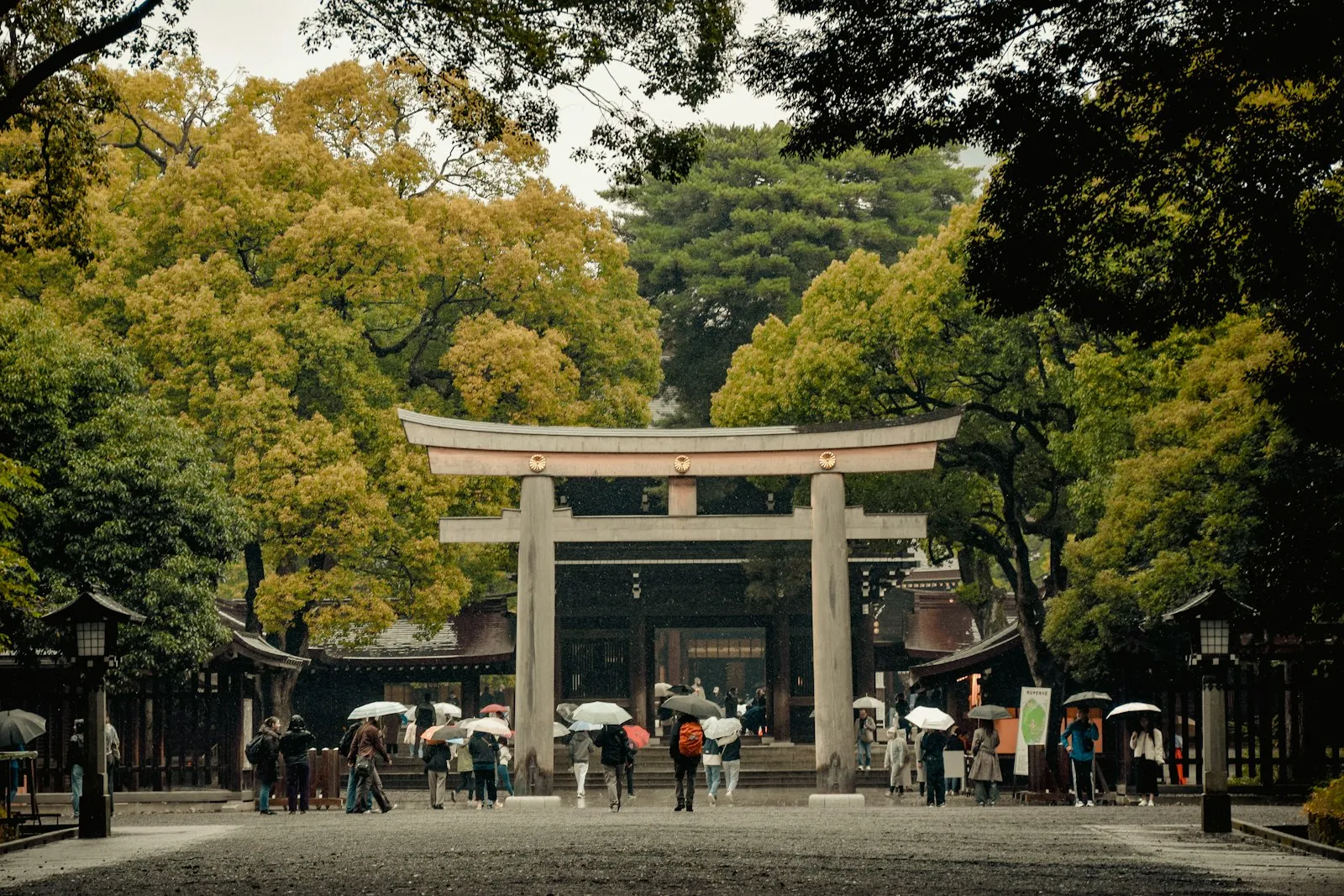
At a shrine or a temple, bow once at the torii before you pass through, rinse your hands at the water basin, and drop your coins in the box. At a Shinto shrine the sequence is two bows, two claps, one bow. Nobody minds a visitor getting the order slightly wrong, and standing back to watch somebody else first is the easiest way to learn it.