
Shirakawa-go
On the map
Roofs built for snow
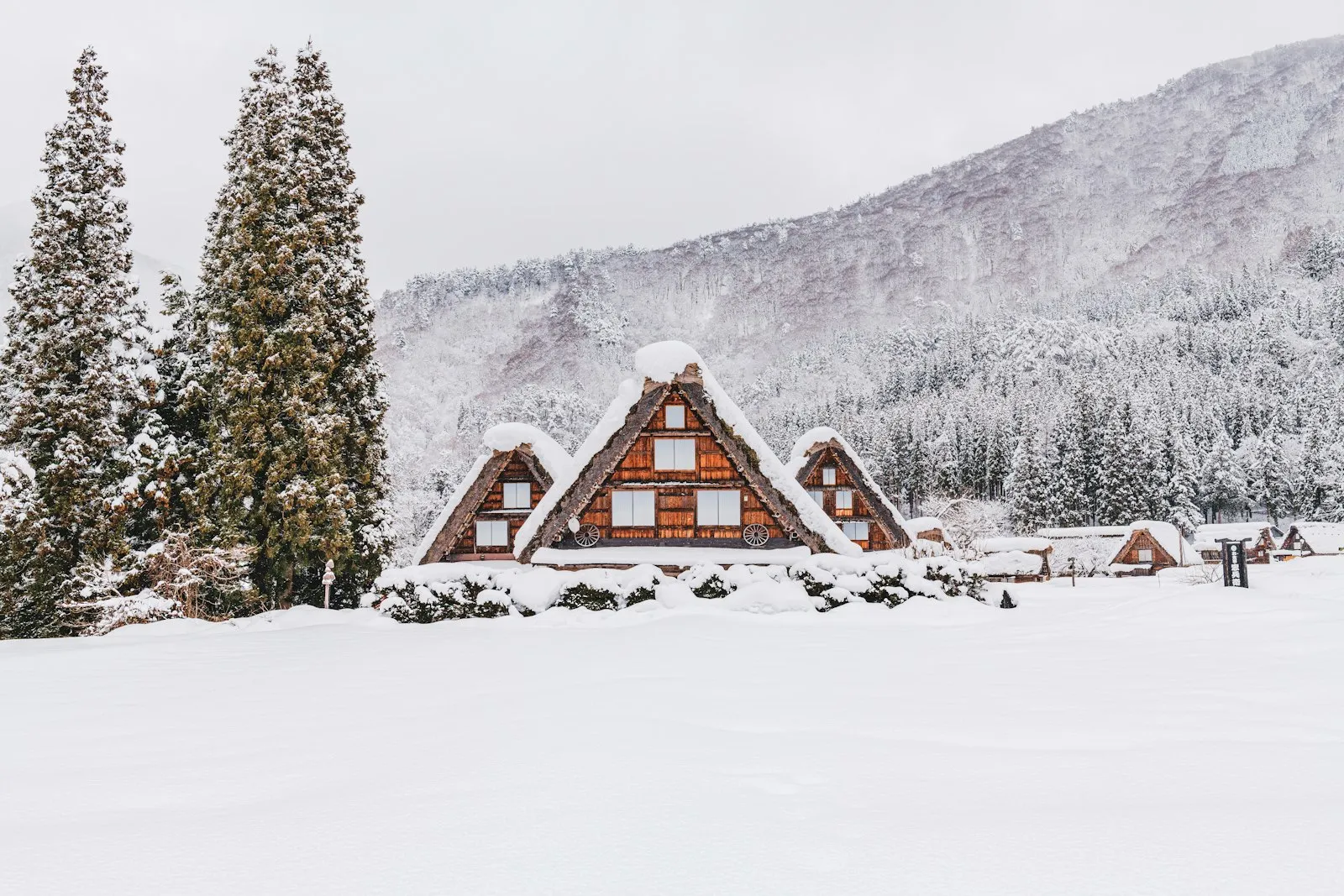
The pitch of those roofs is engineering, not decoration. Shirakawa-go is a cluster of gassho-zukuri farmhouses, named for hands pressed together in prayer, in the village of Shirakawa in Ono District, Gifu Prefecture. They stand in the Shogawa river valley, hemmed in by mountains rising to 1,500 metres, in a region that takes serious snowfall, and the steep thatch was designed to shed it. UNESCO inscribed the villages in 1995 along with Gokayama, over the line in Nanto, Toyama: three historic mountain villages, 68 hectares of listed ground between them.
A working village, not a museum
Shirakawa had an estimated 1,630 residents in 588 households on 1 January 2019, spread over 356.55 square kilometres, a density of 4.6 people per square kilometre. Ogimachi, the part most visitors walk, lies on a terrace on the east bank of the Sho River, about 1,500 metres long and 350 metres wide at roughly 500 metres of altitude, with Edo-period lanes two to four metres across between the houses. Silkworms were raised here from the sixteenth century and became a proper side industry in the late seventeenth, which is what all that roof space was for.
The thatch, and what it costs
A gassho roof is rethatched every 30 to 40 years. Converted into today's money, one side of a single roof is said to cost more than 10 million yen, and historically the work was done by the village without payment, which is a large part of why the style survived at all. The other number worth knowing is that 95 percent of visitors are day trippers, spending a few thousand yen a head. Stay a night in a farmhouse that takes guests and you get the village before the first coach and after the last one, which is the version that is actually quiet.
Getting there, the seasons and staying connected
There is no station in the village: you arrive by bus from the nearest rail town, usually Takayama or Kanazawa. Mount Hakusan, the high point of the village's territory, reaches 2,172 metres. The Sea of Japan side of Honshu is the snowy side in winter, so plan for snow, ice and short daylight from December on, and for autumn colour from late October into early December. docomo does not name Shirakawa-go in its published 5G lists and reports LTE population coverage of about 100 percent nationwide, so download your maps. Goodbars sells a Japan eSIM you install at home and switch on when you land; it runs on NTT docomo, Japan's largest mobile network by mobile contracts, and our Japan coverage page shows where it reaches and what independent speed tests measure.
Common questions
What is gassho-zukuri?
A farmhouse style with steep thatched roofs built to shed heavy snow, named for hands pressed together in prayer. The thatch is replaced every 30 to 40 years.
Is Shirakawa-go a UNESCO World Heritage Site?
Yes, since 1995, together with Gokayama in Nanto, Toyama. The listing covers three historic mountain villages over 68 hectares in the Shogawa river valley.
Is it worth staying the night in Shirakawa-go?
95 percent of visitors are day trippers, so a night gets you the village before the first coach and after the last. The village had about 1,630 residents in 2019, so book the farmhouse beds well ahead.
Will my phone work in Shirakawa-go?
docomo does not name Shirakawa-go in its published 5G spot lists and reports LTE population coverage of about 100 percent nationwide, so treat 5G as handset and spot dependent and download offline maps for the valley. Goodbars sells a Japan eSIM you install at home and switch on when you land; it runs on NTT docomo, Japan's largest mobile network by mobile contracts, and our Japan coverage page shows where it reaches and what independent speed tests measure.

Install before landingLAND ONLINE
Set up your eSIM at home and step off the plane already connected. No counter, no passport handed over, no queue.
See the plans- No ID needed
- No contract
- Instant email delivery
- Works on arrival