The short answer
Japan is a low-crime country, and the risk to a visitor sits in a few night-time districts and in the law. Kabukicho, Roppongi, Shibuya and Ikebukuro are the police's high-risk zones in Tokyo for drink spiking and card fraud, where victims wake with no memory of the evening and a very large sum already billed. Most British victims were approached by an English-speaking street tout, so never follow one into a bar. Drug laws are absolute, street smoking is illegal in Tokyo and some other cities, and you can be held for up to 23 days without charge. Leave your phone's earthquake and typhoon alerts switched on, and almost none of this will reach you.
Four districts, one tout, and the bill that follows
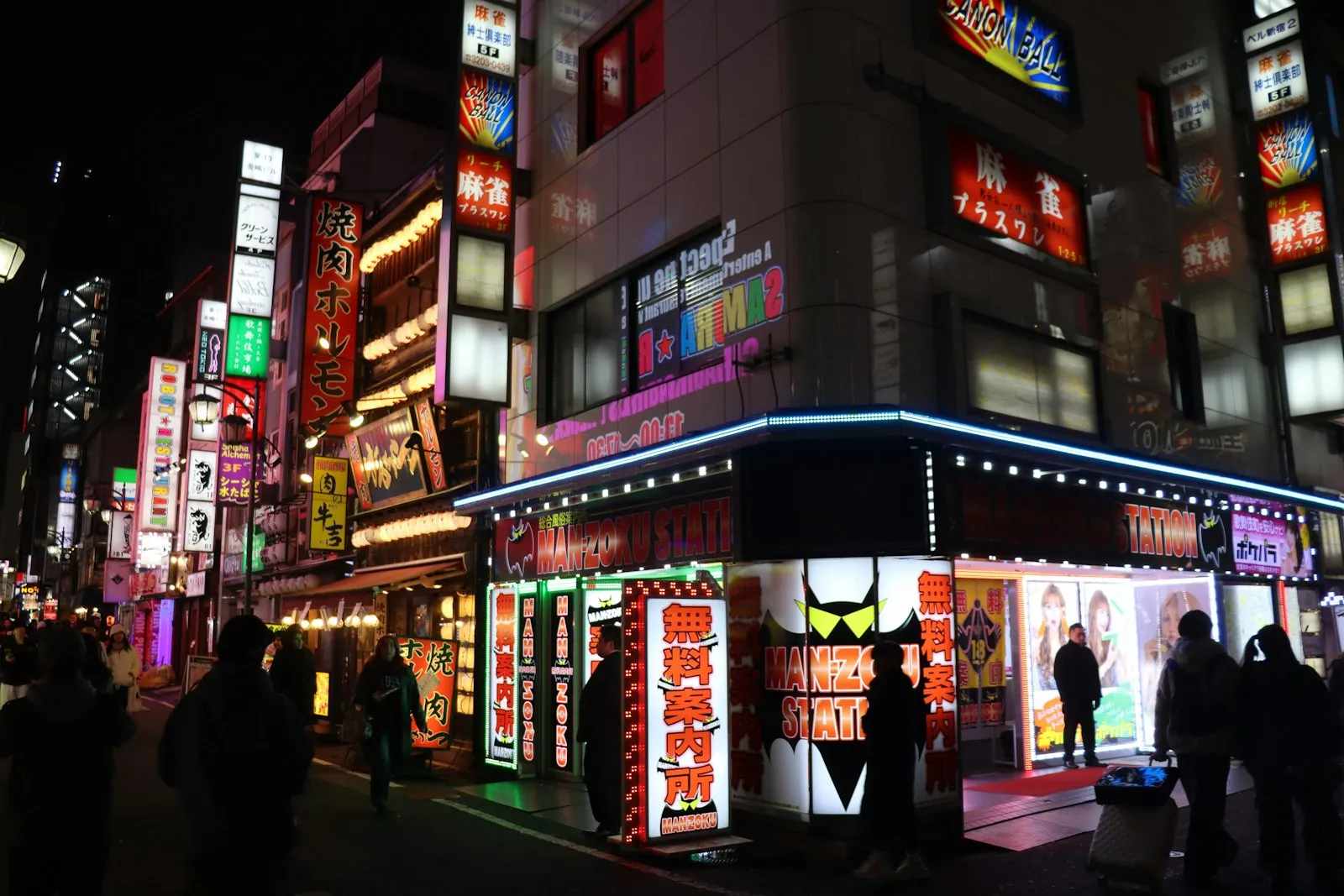
Four Tokyo districts carry more risk after dark: Kabukicho, Roppongi, Shibuya and Ikebukuro. The police treat them as high-risk zones for drink spiking and card fraud. A drink is spiked, the victim wakes with no memory of the evening, and a very large sum has already gone through their card. Most British victims were approached in the street by an English-speaking tout, the kyakuhiki.
Never follow a tout anywhere, however fluent the English. Choose your own bar, see a menu with prices before you go in, and keep your drink in sight. If a bill lands far beyond anything you agreed, know what you are in: disputes over inflated bar bills have ended in arrests. Ask for the police rather than letting the argument run.
On the train: groping, and the carriage that answers it
Groping and upskirt photography on crowded commuter trains are reported by female passengers, and it is the street-level crime a visitor is most likely to meet. It happens at rush hour, in carriages packed tightly enough that a hand is hard to place and easy to deny. Many lines run women-only carriages at those hours, marked on the platform and on the door, and using one is ordinary rather than a statement.
If it happens, the response that works is loud. Say something, take hold of the wrist, and get station staff at the next stop. Japanese carriages are quiet, so a raised voice carries and removes the cover the crush was providing. Staff treat it seriously.
Drugs, smoke, drink, and twenty-three days
Japan has zero tolerance on drugs, and the enforcement surprises people. A positive test brings charges even where you did not take the substance knowingly, and refusing a test can itself lead to arrest. Sentences include prison labour.
Two smaller rules catch more visitors. Smoking on the street is illegal in Tokyo and some other cities: you smoke in a designated area or not at all. Drinking in public is generally legal, with local exceptions such as New Year's Eve bans in some areas, though loud behaviour draws attention fast. Behind all of it sits the detention rule: up to 23 days without charge, even over a minor offence, which is why a small incident is worth defusing rather than winning.
Earthquakes, typhoons, and who Japan is for
Earthquakes and typhoons are part of the country, not an emergency scenario. Your phone carries Japan Meteorological Agency alerts: leave them switched on and learn what the alarm sounds like. Typhoon season runs from June to December, peaking from July to September, and the usual effect for a traveller is cancelled trains and closed attractions, not danger.
On LGBT+ travel the picture is mixed: same-sex sexual activity is legal, there is no anti-discrimination protection, and same-sex marriage is not recognised. Shinjuku Nichome in Tokyo and Doyamacho in Osaka are the established districts. Goodbars sells a Japan eSIM you install at home and switch on when you land; it runs on NTT docomo, Japan's largest mobile network by mobile contracts, and our Japan coverage page shows where it reaches and what independent speed tests measure.