Wild animals, not a photo opportunity
Three encounters matter in Japan: bears in the mountains, deer in Nara, and macaques in the monkey parks. The UK FCDO reports that bear sightings and attacks have increased in parts of Japan, especially in mountainous and forested areas, including near populated zones, and its advice is to avoid walking alone where bears have been sighted and to take all rubbish with you, food waste included. Nara's deer look tame and are not: at least 164 people were injured by them between 2017 and 2018. At Iwatayama in Arashiyama you may only feed the monkeys food bought at the park. None of this should keep you indoors. It should keep your snacks in your bag.
Bears: what the FCDO actually says
This is the newest piece of Japanese travel advice and the one guidebooks have not caught up with. The FCDO states that bear sightings and attacks have increased in parts of Japan, especially in mountainous and forested areas, including near populated zones. Its two instructions are practical rather than dramatic: avoid walking alone in areas where bears have been sighted, and take all rubbish with you, including food waste. The second is the part people skip. A bin bag left at a trailhead or a half-eaten onigiri dropped by a path is what turns a passing animal into a returning one. If a local notice board or a ranger says bears have been seen, that is the whole decision made for you.
Which bear lives where
Japan has two, and they are not the same animal. The Asian black bear is distributed as far as the islands of Honshu and Shikoku, which covers the hiking country behind Tokyo, Kyoto and the Japanese Alps. Hokkaido has the Ussuri brown bear instead, one of the largest brown bears, related to the North American grizzly. The historical record there is sobering: in Hokkaido during the first 57 years of the 20th century, 141 people died from bear attacks and another 300 were injured. That is history, not a forecast, and the point is only that Hokkaido's bear is a different proposition from Honshu's. Treat local signage and closures on either island as instructions rather than suggestions.
Nara's deer, and how to not get butted
Nara Park holds over 1,200 wild sika deer, roaming freely and designated a natural treasure, which is why nobody moves them along. Wild is the operative word. In July 2017 there were around 1,500 deer in the park, and at least 164 people were injured by them between 2017 and 2018. The injuries come from the same situation every time: a person holding food, several deer deciding they want it, and nowhere to back away to. Buy the crackers if you want the experience, feed them quickly and show your empty hands. Do not tease, do not hold food above your head, and do not stand between a deer and the person feeding it. Keep tickets, maps and paper bags out of reach, because those get eaten too.
The monkey parks: Arashiyama and Jigokudani
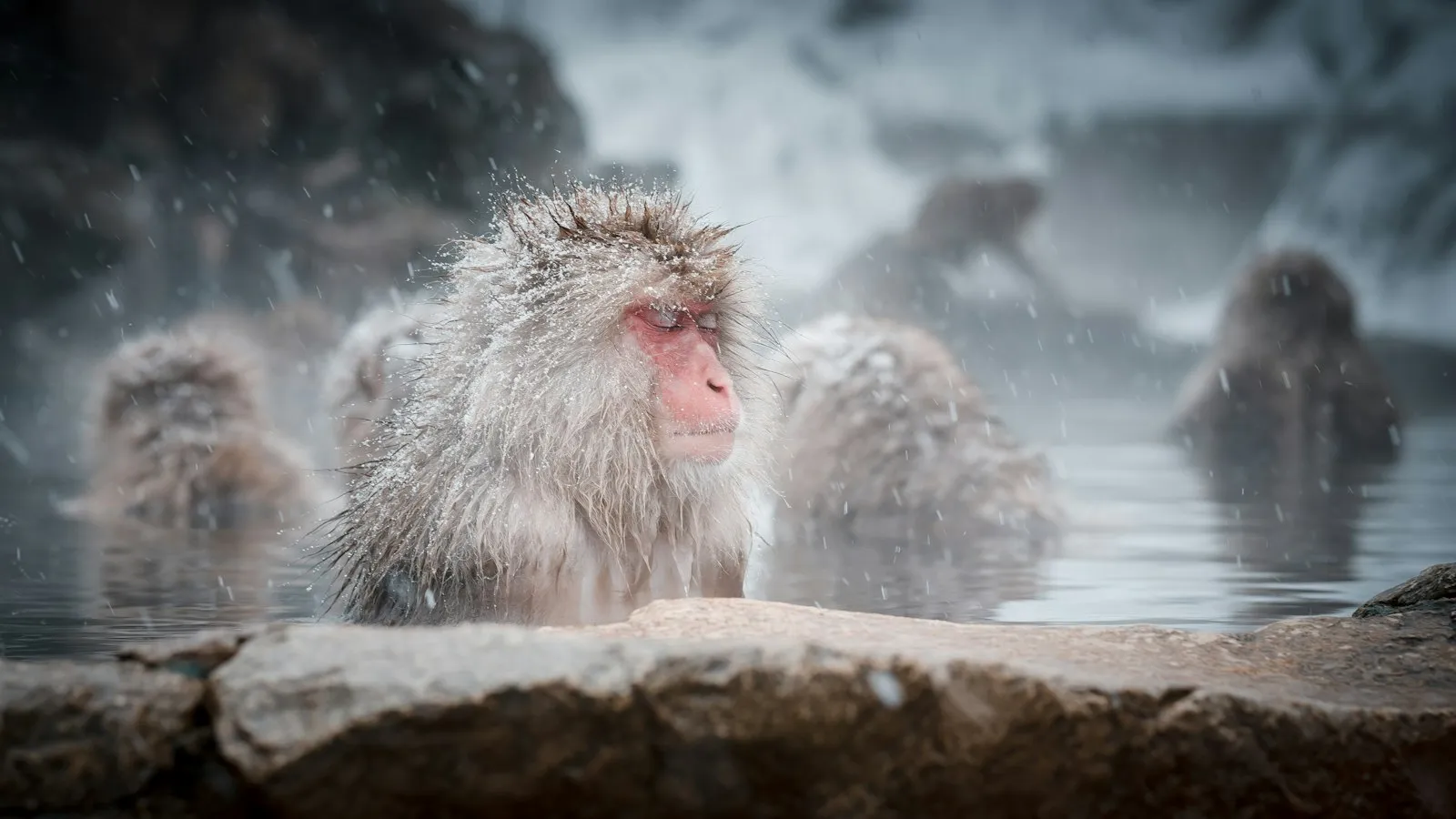
The Japanese macaque is the only native monkey species in Japan, and no other non-human primate lives further north or in a colder climate. Two parks put you near them. Iwatayama, atop Mount Arashiyama in Kyoto, is home to a troop of over 120 macaques: the animals are wild, food may only be bought on site, the climb is about 1.45 km with 160 m of altitude gain, and the park closes at 5 pm. Jigokudani, in Yamanouchi in Nagano Prefecture, is about 3.5 hours from Tokyo, sits at 850 m, is reached only by a narrow 2 km footpath through forest, and has snow on the ground four months a year. Dress for the walk in both cases, and feed nothing you brought yourself.
Hornets, ticks and who to call
The Asian giant hornet is the world's largest hornet, with a body about 45 mm long and a 6 mm stinger, and it prefers low mountains and forests while almost completely avoiding plains and high altitudes. That is the same ground you walk on a temple hike. It nests in the ground, in rodent tunnels or near rotten pine roots, so the risk is stepping on a nest rather than meeting one in the air. Keep to the path, and if you see workers streaming in and out of a hole, walk away quietly rather than swatting. The UK FCDO also lists biting insects and ticks among Japan's health risks, so cover up on forest walks. For an ambulance the number is 119; for police it is 110.