
Tokyo
Tokyo is a capital of more than fourteen million people that behaves like a chain of cities strung along a loop line. It rewards a good base, a transit app, and a phone that can read a menu.
Tokyo in a nutshell
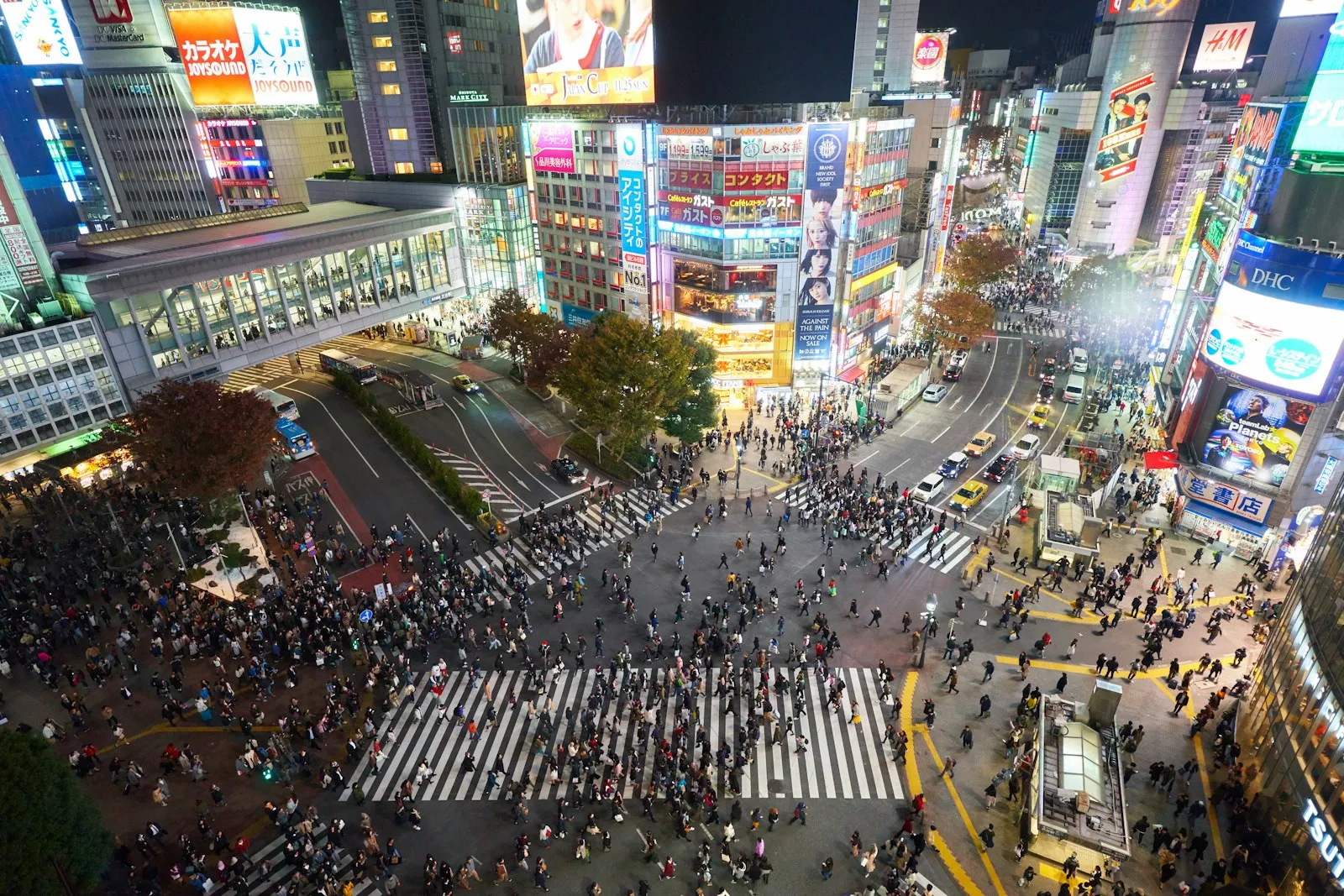
Japan's capital holds more than 14 million people in the city proper as of 2023, and Greater Tokyo counts 33 million in 2025, the third most populous metropolitan area in the world. The core is the 23 special wards, each with its own centre, station and character, which is why Tokyo reads as a set of cities rather than one downtown. Edo became Tokyo in 1868 and the layers are still visible: Senso-ji in Asakusa was founded in 645, the Ginza Line opened in 1927 as the oldest underground line in Asia, and the glass towers came later. Three days cover the famous crossings and temples; a week lets you pick a ward and stay in it.
The areas of Tokyo
Shinjuku is the obvious base: a station that swallows you whole, department stores above it, and the alley bars of Golden Gai behind. Shibuya is younger and louder, built around the scramble crossing and a short walk from Harajuku and the boutiques of Omotesando. Asakusa is old Tokyo, low buildings and Senso-ji at the end of the shopping street, and it is calmer and cheaper at night. Ginza is where the money shops, Akihabara does electronics and anime, Ueno has the museums and the park, and the outer market at Tsukiji still sells breakfast. Stay near a Yamanote line station and the rest of the city becomes a train ride rather than a project.
Getting there and getting around
Two airports serve the city. Haneda is the closer one, linked by the Tokyo Monorail that opened in 1964, and Narita sits about 60 km east: the JR Narita Express reaches Tokyo Station in about an hour, and the Keisei Skyliner reaches Ueno in around forty minutes. In town you ride. The JR Yamanote loop line circles the main districts, and the Tokyo Metro and Toei subway networks fill in everything inside and around it. Buy a Suica or Pasmo IC card, or load one onto your phone, and stop thinking about fares. Trains are frequent, signs are bilingual, and the transit app in your pocket is the only map you need.
When to visit and staying connected
The rainy season, tsuyu, sits over most of the country from early June to mid-July, and typhoons cross the islands from June to December, peaking from July to September. August is the month to skip if heat bothers you: the daily high in Tokyo averages above 31°C. Winter is dry and clear on the Pacific side. Crowds come for cherry blossom from mid-March into April and autumn colour from late October to early December.
Goodbars sells a Japan eSIM you install at home and switch on when you land. It runs on NTT docomo, Japan's largest mobile network by mobile contracts, and our Japan coverage page shows where it reaches and what independent speed tests measure; what we can say is that you are online walking out of arrivals, which is exactly when you need to be.
Common questions
Which area should I stay in for a first visit?
Shinjuku or Shibuya if you want the city at full volume, Asakusa or Ueno if you want to sleep and pay less. Anywhere on the Yamanote loop works, because the loop is how you will move.
Do I need cash in Tokyo?
Some. Cards are widely accepted, but cash still goes a long way at small restaurants and shrines, and a Suica or Pasmo IC card covers trains and konbini. Carry a little of each.
How far is Narita from the city?
About 60 km east. The Narita Express reaches Tokyo Station in about an hour and the Keisei Skyliner reaches Ueno in around forty minutes. Haneda is the closer of the two airports.
Which network does the Goodbars Japan eSIM use in Tokyo?
It runs on NTT docomo, Japan's largest mobile network by mobile contracts. Our Japan coverage page shows where it reaches and what independent speed tests measure.
On the map
Install before landingLAND ONLINE
Set up your eSIM at home and step off the plane already connected. No counter, no passport handed over, no queue.
See the plans- No ID needed
- No contract
- Instant email delivery
- Works on arrival