
Hakone
Hakone is a small spa town in the hills of Kanagawa whose hot springs sit within view of Mount Fuji, the most visited mountain in Japan, and it is an easy night of hot water to add to a Tokyo trip.
Hakone in a nutshell
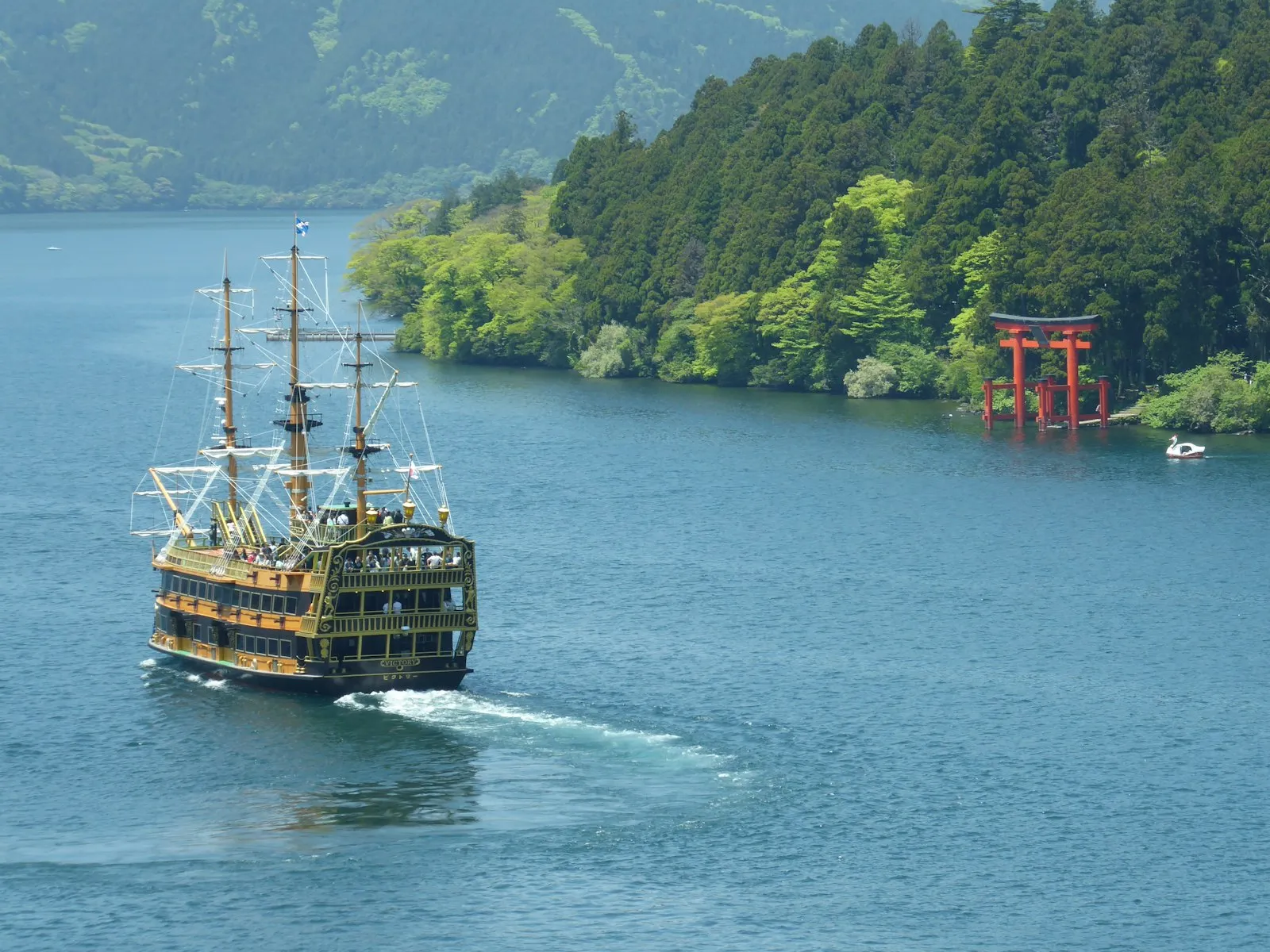
Hakone is a small spa town in Kanagawa Prefecture, home to 10,965 people on 1 October 2023, in the hills and a regional train ride out of Tokyo. It is famous for one combination: many hot springs within view of Mount Fuji, the most visited mountain in Japan. The town is built around Lake Ashi, the Hakone Shrine and the old Hakone Barrier on the road east, with museums and gardens in between. It works as a day out of Tokyo, but it is really an overnight place: the reason to come is a ryokan, a bath and the chance of the mountain at dawn.
Around Lake Ashi
Lake Ashi is the centre of a Hakone day, together with the Hakone Shrine and the site of the Hakone Barrier, the old checkpoint on the road east. Mount Fuji, an active volcano of 3,776 metres added to the UNESCO list as a cultural site on 22 June 2013, stands beyond it and shows itself only on clear days; it is snow-capped for about five months of the year. The Hakone Botanical Garden of Wetlands and the Hakone Venetian Glass Museum fill a wet afternoon. The town has many hot springs, so choose where you sleep by the bath, not by the address.
Getting there and getting around
Hakone is reached on regional trains out of Tokyo; check the route and the connections for the last stretch into the hills in a transit app before you go. Check the return times before you set out, because the last leg home is the part people misjudge. A Suica or Pasmo IC card works on the trains and buses. If you are staying the night, send the big case ahead with a luggage-forwarding service (takkyubin) between hotels and travel up with a day bag. Keep some cash for small inns and bath counters.
When to visit and staying connected
Hakone is milder than Nikkō, averaging 13.3°C over the year, with August around 24.0°C and January around 2.9°C. Winter is dry and clear on the Pacific side, which gives the best odds of seeing Fuji, and the rainy season from early June to mid-July gives the worst. Book early for Golden Week, Obon and New Year.
Goodbars sells a Japan eSIM you install at home and switch on when you land; it runs on NTT docomo, Japan's largest mobile network by mobile contracts, and our Japan coverage page shows where it reaches and what independent speed tests measure. Renting a pocket Wi-Fi is a long-standing habit for visitors to Japan too, and it suits a group that moves together all day.
Common questions
Can I see Mount Fuji from Hakone?
On a clear day, yes: the hot springs sit within view of it. It hides in cloud often enough that you should plan the trip around the bath and treat the mountain as a bonus.
Can I use an onsen in Hakone if I have tattoos?
Many baths do not admit visible tattoos, and the rule varies by house. Ask before you pay, cover a small one, or book a private bath, which is also how couples and families bathe together, since public baths separate the sexes.
Is Hakone a day trip or an overnight stay?
Both work, but a night is better. A day covers Lake Ashi and the shrine; a night adds a ryokan dinner, served at fixed times, and an early look for the mountain.
Which network does the Goodbars Japan eSIM use in Hakone?
We have not published that yet. Goodbars sells a Japan eSIM you install at home and switch on when you land; it runs on NTT docomo, Japan's largest mobile network by mobile contracts, and our Japan coverage page shows where it reaches and what independent speed tests measure.
On the map
Install before landingLAND ONLINE
Set up your eSIM at home and step off the plane already connected. No counter, no passport handed over, no queue.
See the plans- No ID needed
- No contract
- Instant email delivery
- Works on arrival