What the night is actually made of
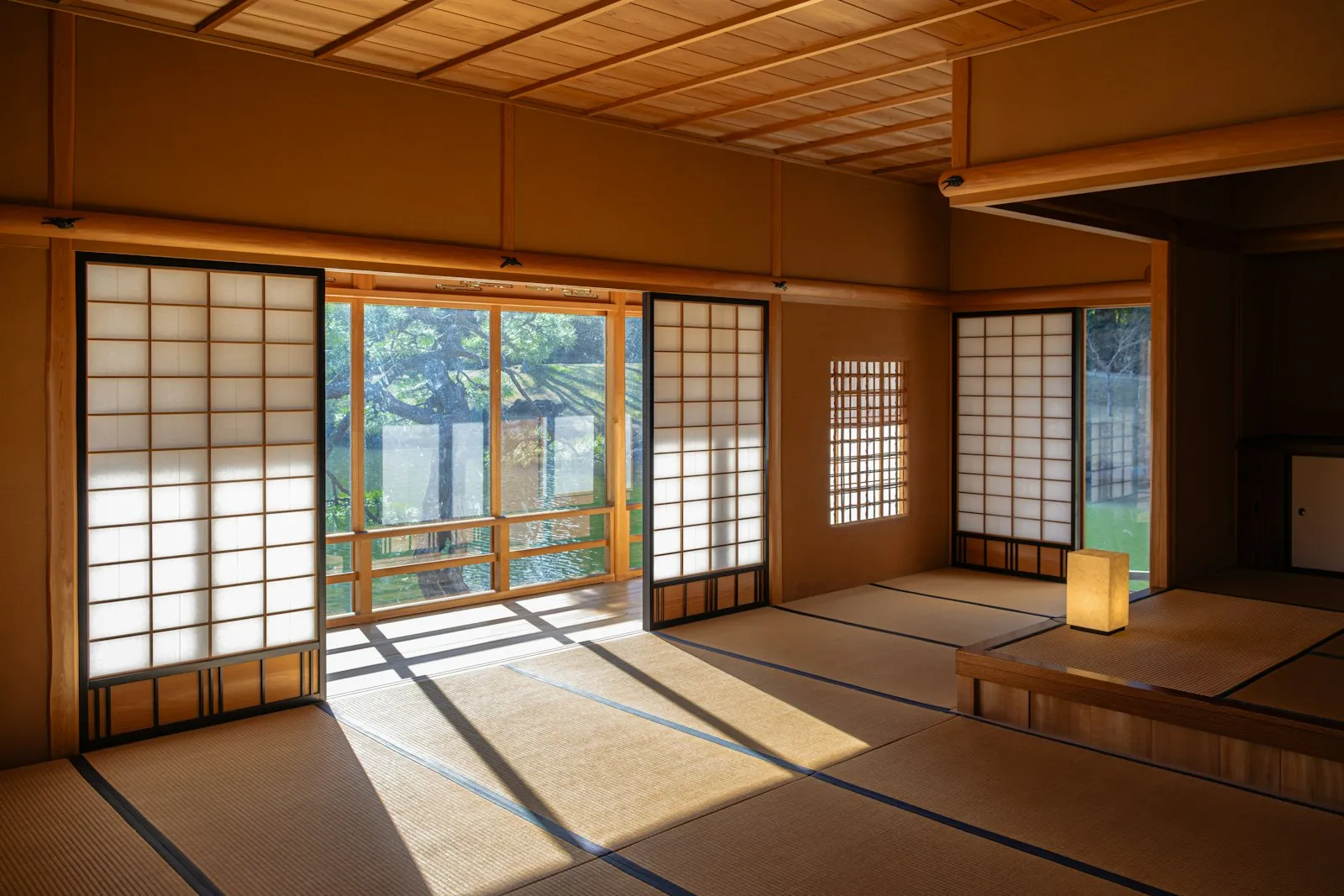
A ryokan is a traditional inn with tatami-matted rooms, communal baths and shared spaces where guests sit around in the inn's sleepwear and talk to the owner. Shoes come off at the door, slippers are provided, and there is a separate pair for the toilet. Dinner and breakfast are served at fixed times, and while you eat, staff lay out the futon in your room, which is why the room looks different when you come back. None of this is decoration: it is the format, and it decides your evening. Arrive in the afternoon rather than after dark, and do not book a ryokan for the night you have a late flight.
Older than most countries' hotels
Ryokan have existed since the eighth century. Nishiyama Onsen Keiunkan, the oldest hotel in the world, was created in 705, and Hoshi Ryokan followed in 718; inns of this kind also served travellers along Japan's old highways. That history is part of the price, and so is the service: rates are often quoted per person rather than per room, and dinner and breakfast are frequently included. Check both before you compare a ryokan with a business hotel, because the two numbers are not measuring the same thing. In recent years many ryokan have been redeveloped in their original style, particularly by resort chains, one of which opened its first ryokan in Karuizawa in 1914.
The bath, and the rules around it
If the inn has an onsen, the water has to qualify: Japanese law sets a minimum of 25 degrees at source, from a depth of at least 1.5 kilometres, with stated amounts of minerals such as sulphur, sodium, iron or magnesium. There are roughly 25,000 hot spring sources in Japan and about 3,000 onsen establishments using them, indoors, outdoors, or both. Baths inside a ryokan or hotel are generally open 24 hours, or close only for a short daily cleaning, so a bath at two in the morning is normal. You bathe nude, men and women separately, wash yourself before getting in, and keep the small towel out of the water.
Tattoos, and how people get around them
Tattoos are the question we get most, and the answer is: ask the inn before you book. The UK Foreign Office puts it plainly, that some public facilities do not admit people with tattoos, for example public swimming pools, hot springs, beaches and some gyms, and that other places ask you to cover them. The practical routes are a private bath, which many inns let you reserve and which is also how couples and families bathe together, or a cover-up. In public baths mixed bathing is not allowed; in some prefectures where it is permitted, visitors are asked to wear swimsuits. None of that is a judgement on you, it is a house rule, and the inn will tell you which one it keeps.
Where to actually book one
Ryokan are hard to find in Tokyo and other large cities, and often much more expensive than modern hotels and hostels there, though some big cities do have competitively priced ones. The traditional inns are concentrated in areas with natural hot springs. Hakone is the easy first: a spa town in Kanagawa with hot springs in view of Mount Fuji, and a place our destination page calls an overnight rather than a day trip. Arima Onsen, in the hills behind Kobe, was named in the Pillow Book as one of Japan's three famous springs and was ranked the most prestigious in the Edo period. Both are a short hop from a city you were visiting anyway.
The temple version, and getting the night right
The variant worth knowing is the temple lodging on Mount Koya. Koyasan is a temple settlement in Wakayama Prefecture south of Osaka, with a university of religious studies and 120 sub-temples, many of which offer lodging to pilgrims; UNESCO inscribed Kongobu-ji there in 2004 as part of the Sacred Sites and Pilgrimage Routes in the Kii Mountain Range. Meals run to set times, as in a ryokan. Whichever you choose, book one night rather than three, arrive early, and expect the evening to be quiet. For signal, NTT docomo names no 5G SA spot at Hakone or Koyasan, so expect LTE, which docomo reports at about 100% population coverage, with 5G depending on your handset. Goodbars sells a Japan eSIM you install at home and switch on when you land; it runs on NTT docomo, Japan's largest mobile network by mobile contracts, and our Japan coverage page shows where it reaches and what independent speed tests measure.