The line that set the standard
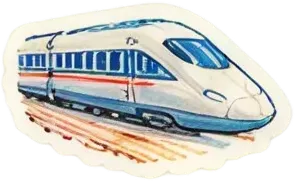
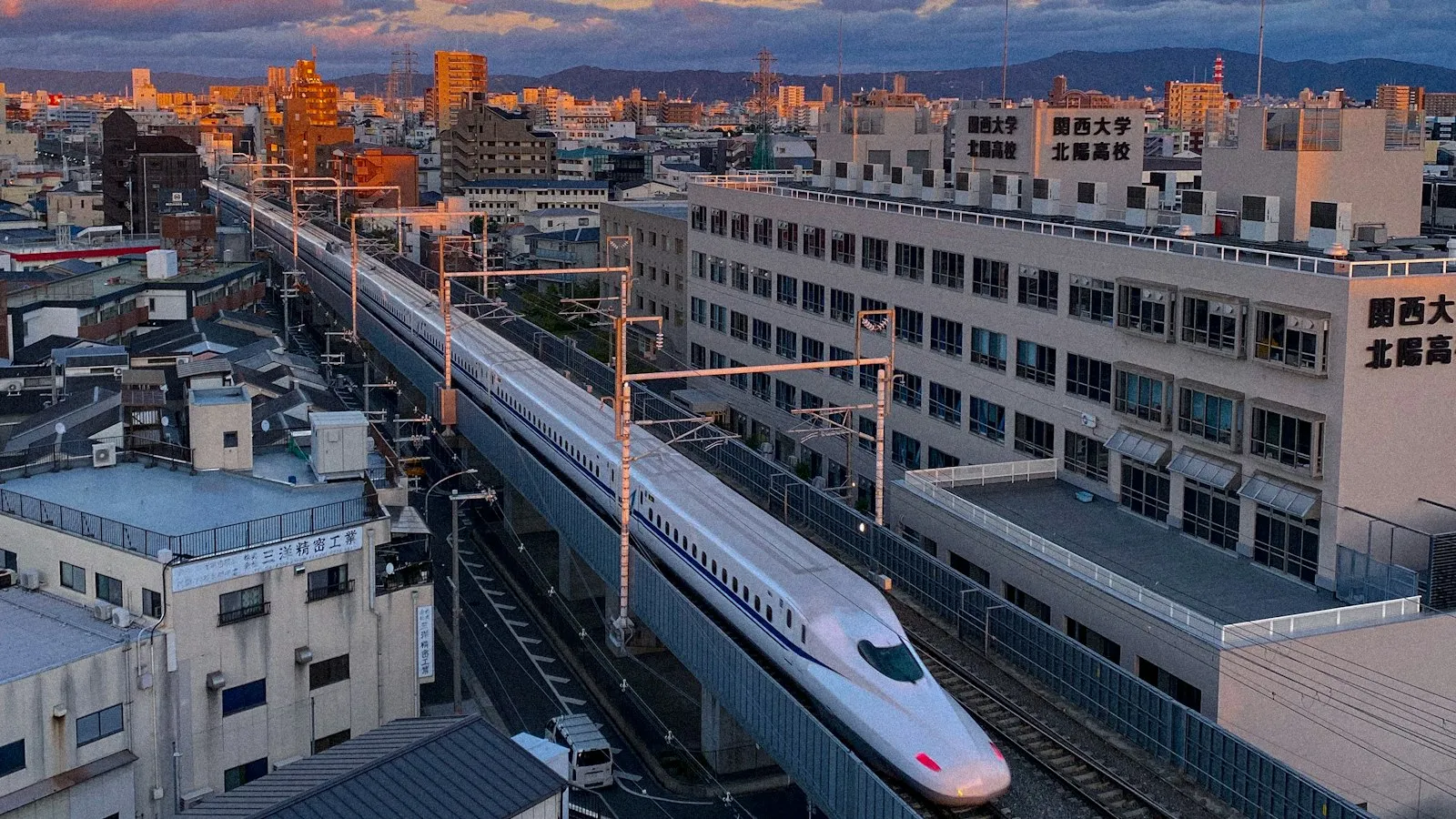
The Tokaido Shinkansen runs between Tokyo and Shin-Osaka and it is the line most visitors ride. It opened on 1 October 1964, shortly before the Tokyo Olympics, as the first railway in the world built for regular operation above 200 km/h, and it became the model for every high-speed system since. Today the maximum operating speed is 285 km/h, all passenger trains are 16-car sets, and the fastest Tokyo to Shin-Osaka run takes 2 hours 21 minutes. In fiscal 2024 the line carried 168 million passengers, an average of 460,000 a day over some 383 services, and the March 2026 timetable allows up to 13 Nozomi an hour at the busiest times.
Nozomi, Hikari, Kodama
Three service types share the same track. Nozomi is the fastest and stops least: between Tokyo and Shin-Osaka it calls only at Shinagawa, Shin-Yokohama, Nagoya and Kyoto. Hikari is the limited-stop train and Kodama stops everywhere. Many Nozomi and Hikari trains continue west over the San'yo Shinkansen, some as far as Hakata; there Nozomi reaches 300 km/h and stops at Shin-Kobe, Okayama, Hiroshima and Kokura plus at least one further station, and the fastest Tokyo to Hakata run takes 4 hours 45 minutes. If you hold a Japan Rail Pass, note that Nozomi and Mizuho need a special ticket issued only to pass holders, which is the single most common surprise at the gate.
Reserve, because the free seats shrank
Turning up and taking any seat used to be a fine plan. From the timetable change on 15 March 2025, Nozomi services run with only two non-reserved cars instead of three outside peak periods, and the operator put that down to how many people now book online. So book a seat, especially for a first or last train of the day and around holidays. One more practical point from the Tokaido line: a large suitcase needs a reserved oversized-luggage space, so sort that at the same time as the seat rather than at the platform, where the alternative is standing in the vestibule with your bags.
When the Japan Rail Pass pays
The pass comes in 7, 14 or 21 consecutive days, and those days end at midnight rather than 24 hours after you start. Bought online, the Ordinary pass is 50,000 yen for 7 days, 80,000 for 14 and 100,000 for 21; the Green pass is 70,000, 110,000 and 140,000. Exchange orders bought from an overseas agency on or after 1 October 2026 cost more: 53,000, 84,000 and 105,000 yen for Ordinary. Add the Nozomi and Mizuho supplement, and the pass only wins on long itineraries, which most one-week trips are not. Work out your actual legs first, then compare; an exchange order also has to be swapped within 90 days.
On board, and the lines beyond Tokaido
Power depends on the train. On N700S sets there is an outlet at every seat; on N700A sets the outlets are at the window seats and the seats at the car ends in standard class, and at every seat in Green cars. Smoking rooms were deactivated in March 2024, so the trains are now smoke free end to end. Away from the Tokaido, the Hokuriku Shinkansen runs from Tokyo to Tsuruga in 3 hours 8 minutes; it reached Kanazawa on 14 March 2015 and Fukui and Tsuruga on 16 March 2024, which is what makes a Kanazawa night an easy addition to a Tokyo trip.
Signal in the tunnels, and what we can promise
Do not plan a video call at 285 km/h. Japan's Ministry of Internal Affairs and Communications announced in November 2020 that mobile coverage was complete on all shinkansen sections then in service, and in the same statement warned that some stretches have a weak signal and that calls can drop depending on your carrier and handset. NTT docomo says it increased its Sub6 5G base stations along the Tokaido line and names the shinkansen platform at JR Shin-Kobe as a 5G SA spot, but it makes no claim of continuous 5G on board. Expect LTE to hold up and 5G to come and go. Goodbars sells a Japan eSIM you install at home and switch on when you land; it runs on NTT docomo, Japan's largest mobile network by mobile contracts, and our Japan coverage page shows where it reaches and what independent speed tests measure.